

healthcare accessibility audits and remediation

Healthcare Accessibility Services for Portals and Telehealth

HHS Section 504 requires many hospitals, clinics and other HHS-funded providers to make web content and mobile apps WCAG 2.1 AA by May 11, 2027 (15+ employees) or May 10, 2028. We audit patient portals, telehealth, scheduling, EHR workflows, medical PDFs and healthcare apps to WCAG 2.2 AA with NVDA, JAWS and VoiceOver. Starting a project? Book a free 30-minute call. Ready to test? Start a $500 Quick Audit.

Healthcare WCAG Auditing

Healthcare Accessibility Audits for Patient Portals and Telehealth

Healthcare accessibility services make sure every patient, caregiver and staff member can book an appointment, complete intake, join a telehealth visit, read lab results, refill a prescription and download care instructions using a keyboard, a screen reader, magnification or a small phone screen. Under the HHS Section 504 web and mobile rule, recipients of HHS funding must conform web content and mobile apps to WCAG 2.1 Level AA, and public hospitals and health departments are also covered by the ADA Title II web rule. We audit to WCAG 2.2 AA, which includes every WCAG 2.1 AA requirement, so one engagement covers the legal floor and the current W3C recommendation.

HalfAccessible audits and remediates patient portals, telehealth platforms, EHR and EMR workflows, scheduling, billing, prescriptions, labs, medical PDFs, mobile healthcare apps and staff systems. Audits are founder-led by Mohammad Shadab Saifi (IAAP CPACC, WAS and CPWA) with 10+ years of accessibility work. Review the sample audit report, compare packages on the pricing page, or explore accessibility audit services, ADA and Section 508 audits and monitoring and governance.

Healthcare Accessibility Deadlines at a Glance

  • May 11, 2027 Section 504 WCAG 2.1 AA date for HHS-funded recipients with 15 or more employees Source: HHS Office for Civil Rights
  • May 10, 2028 Section 504 WCAG 2.1 AA date for HHS-funded recipients with fewer than 15 employees Source: HHS Office for Civil Rights
  • Apr 26, 2027 ADA Title II WCAG 2.1 AA date for public hospitals and health departments in governments of 50,000 or more people Source: ADA.gov Title II web rule
  • 5 narrow exceptions in the Section 504 web rule, such as archived content and individualized password-protected documents Source: 45 CFR 84.85 (eCFR)
Get Started

Choose Your Next Step

Still scoping Section 504 or Title II work, or need a quote? Start with the free call. Already have findings, a vendor question or a live portal issue to review? Book the technical hour.

  • $100

    One-Hour Technical Consultation

    Best for: web, IT and product teams who need technical answers now

    Walk through existing audit findings, talk directly with your developers or portal vendor about fixes, or review a live patient-facing issue, with a written summary within 24 hours.

    Book the $100 consultation
  • $500

    Quick Accessibility Audit

    Best for: a first look at the pages patients use most

    Manual WCAG 2.2 review of up to 5 representative templates, such as find a doctor, appointment request and portal sign-in, with a top-10 issues report.

    Start a $500 Quick Audit
  • Quote

    Medical PDF Remediation

    Best for: consent forms, lab reports, discharge instructions and patient education PDFs

    Send a sample of your documents and we reply with a fixed quote. We remediate them to PDF/UA-aligned practices and check every file with PAC and NVDA.

    See PDF document remediation
WCAG 2.2 Specialists
Patient Portal Accessibility
Manual + Automated Testing
Screen Reader Testing
Mobile Accessibility
PDF Accessibility Experts
Healthcare Accessibility

How We Validate Healthcare Portals and Websites

The services regulated portals need, how we test whole health systems, the WCAG criteria that fail most often, how the federal rules fit together, budget plans and medical PDFs.

Services That Validate Accessibility for Regulated Healthcare Portals

Validating a regulated patient portal takes more than an automated scan. These are the services that give a compliance, legal or procurement team evidence it can rely on.

  • Manual audit: WCAG 2.2 AA testing of real patient journeys (sign-in, scheduling, intake, results, secure messaging, bill pay and telehealth).
  • Assistive technology: NVDA, JAWS, VoiceOver and TalkBack plus keyboard-only checks.
  • Report: every failure mapped to its WCAG success criterion, the affected template and a recommended fix, then a retest that confirms fixes work.
  • Evidence: a VPAT or Accessibility Conformance Report when you sell the portal to hospitals and health plans, and ongoing accessibility monitoring so new releases do not undo the work.
See the sample audit report

Healthcare Accessibility Testing Services for Health Systems

A health system rarely has one website: the hospital site, find a doctor, location pages, bill pay, an EHR vendor portal (for example Epic MyChart or Oracle Health), telehealth, careers, donations and hundreds of patient education PDFs. We sample each template and vendor tool once, following the W3C WCAG-EM 2.0 evaluation method.

  • Ownership: each finding is labelled as your content, a vendor setting you can change, or a vendor code defect, so web, IT and vendors get the tickets they own.
  • Vendors count: the HHS Section 504 rule covers web content and apps a recipient provides directly or through contractual, licensing or other arrangements.
  • Coverage: the $2,000 Complete Audit covers up to 25 templates or key journeys and includes a retest of fixed issues.
Compare accessibility audit services

Patient Portal Accessibility: WCAG Criteria That Fail Most Often

In patient portals the same success criteria cause most barriers. WCAG 2.1 AA is the legal floor under Section 504, and we also test the WCAG 2.2 additions because sign-in and intake are where patients most often get stuck.

  • Sign-in and MFA: people must be able to paste a password or one-time code, with no puzzle (3.3.8 Accessible Authentication).
  • Session timeouts: HIPAA-driven automatic logoff needs a warning and a simple way to extend, with at least 20 seconds to respond (2.2.1 Timing Adjustable).
  • Lab results: tables need real header markup (1.3.1) and abnormal flags cannot rely on colour alone (1.4.1).
  • Forms and messages: status messages such as appointment booked are announced (4.1.3), intake does not ask twice (3.3.7) and icon buttons have names (4.1.2).
Explore accessibility remediation

Section 504, Section 1557 and HIPAA: How the Rules Fit Together

Three federal rules shape US healthcare websites. Your counsel should confirm which rules apply to you.

  • Section 504: the HHS rule (45 CFR 84.84) requires WCAG 2.1 A and AA by May 11, 2027 (15 or more employees) or May 10, 2028, after HHS added a year in its May 7, 2026 interim final rule.
  • Section 1557: the Section 1557 rule (45 CFR 92.204) covers health programs delivered through ICT, naming telehealth interfaces, kiosks, websites, mobile apps and electronic documents.
  • HIPAA: the technical safeguards set no accessibility rules, but automatic logoff and identity checks still have to be usable by people with disabilities.
  • Exceptions: the Section 504 exceptions are narrow. One patient's lab PDF behind a login may be exempt, but the portal pages around it are not.
See ADA and Section 508 audits

Accessibility Compliance on FQHC and Rural Hospital Budgets

Community health centers and rural hospitals face the same Section 504 deadlines with far smaller budgets. HHS said it extended the deadline because many community health centers, hospitals and primary care centers would not meet the original date.

  • Start small: a $500 Quick Audit of the 5 templates patients use most (home, find a provider, appointment request, portal sign-in, bill pay).
  • Fix what repeats: the shared header, footer, forms and colour palette first, because those fixes improve every page.
  • Ask vendors: request a current VPAT and accessibility roadmap from portal, scheduling and payment vendors.
  • No shortcuts: in April 2025 the FTC finalized an order requiring accessiBe to pay $1 million and barring claims that its automated product makes any website WCAG compliant.
  • Plan it: a free 30-minute call is enough to agree the order of work, then book the $2,000 Complete Audit with retest before your deadline.
Read the accessibility audit cost guide

Medical PDFs and Patient Documents

Consent forms, lab reports, discharge summaries, insurance documents and patient education leaflets are often the last barrier in a patient journey. Documents people use to get care must be accessible, even when they were created before your compliance date.

  • Standard: PDF/UA (ISO 14289) aligned tagging, reading order, headings, table headers and form fields.
  • Verification: every remediated document is checked with NVDA and a keyboard.
  • Priorities: start with the forms and instructions patients need before and after a visit.
  • Volume: batch quotes for large patient education libraries.
See PDF document remediation
Healthcare Organizations and Systems

Healthcare Organizations We Audit for Accessibility

We audit hospital websites, patient portals, telehealth, member portals and pharmacy apps for hospitals, clinics, HealthTech vendors, health plans and pharmacies, then help your team fix what we find.

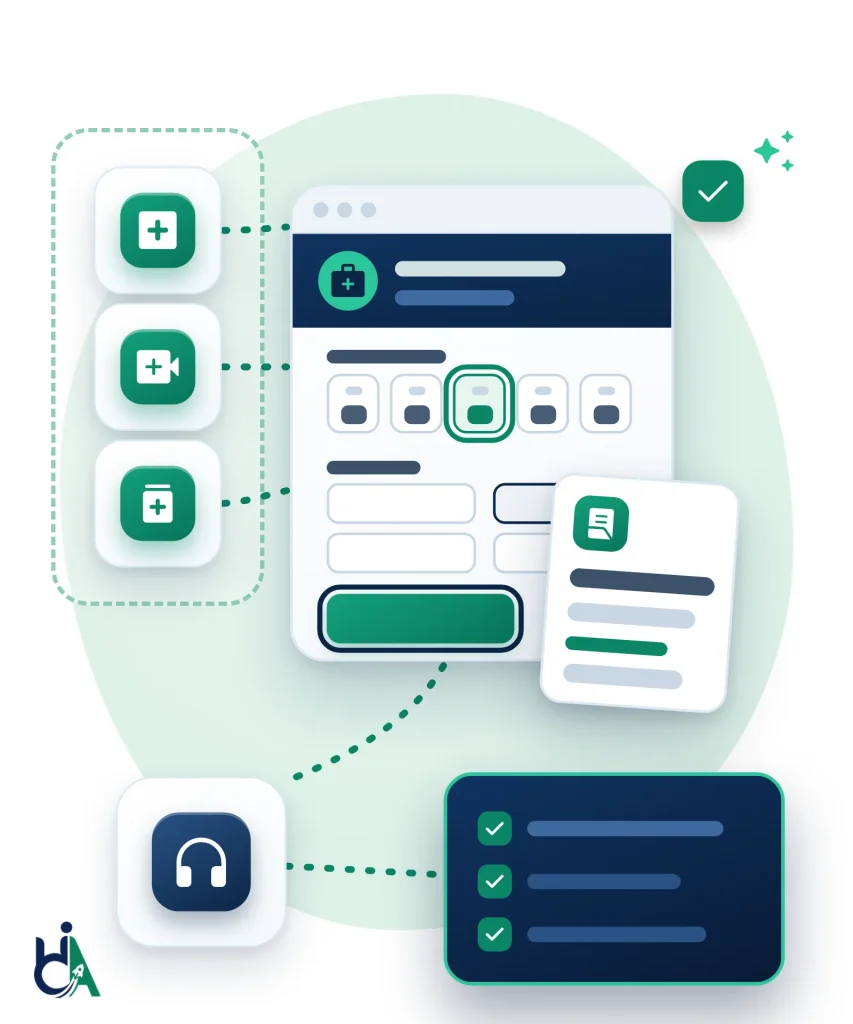
Diagram: tiles for a hospital, a video call and a medicine bottle connect to a patient portal window with a row of appointment dates, where the middle date has a green focus ring, above time slots and a book button, beside a lab result document. Dashed lines lead to a headphones tile and a navy checklist with three green ticks, showing patient journeys tested with a keyboard and screen readers.
  • Hospitals and Health Systems

    Hospital websites, find-a-doctor and location pages, patient portals, bill pay and discharge documents, tested against WCAG 2.1 AA for your Section 504 or Title II date.

  • Clinics, Health Centers and Medical Groups

    Provider search, appointment booking, intake forms and billing portals for clinics, community health centers and rural providers working to the same Section 504 dates on smaller budgets.

  • HealthTech and Patient Portal Vendors

    Design reviews, WCAG 2.2 AA testing in your QA cycle, and VPAT and ACR reports for the hospitals and health plans that buy your software.

  • Telehealth Providers

    Joining a visit, audio and video controls, live captions, chat, waiting rooms and screen sharing, tested with a keyboard, screen readers and on mobile.

  • Health Plans and Insurers

    Member portals, claims, provider directories, digital ID cards, benefits PDFs and payment forms that members use to find and pay for care.

  • Pharmacies

    Prescription refill and medication request forms, medication lists, pharmacy search, accounts and delivery options, tested with screen readers and magnification.

More Healthcare Organizations We Support

Mental Health Platforms

Mental health platforms need accessible onboarding, provider matching, forms, secure messaging, teletherapy, content, and account flows.

  • Provider matching
  • Teletherapy
  • Messaging
  • Account flows

Dental Clinics

Dental practices need accessible appointment scheduling, new patient forms, insurance workflows, treatment information, and location details.

  • Scheduling
  • Insurance forms
  • Treatment content
  • Location details

Diagnostic Labs

Labs need accessible test directories, location search, appointment scheduling, lab results, reports, preparation instructions, and patient portals.

  • Lab results
  • Reports
  • Preparation instructions
  • Location search

Medical Device Companies

Medical device companies need accessible product content, software interfaces, instructions for use, mobile apps, support flows, and procurement documentation.

  • Product content
  • Device software
  • Instructions
  • Support flows

Rehabilitation Centers

Rehabilitation providers need accessible intake, scheduling, patient education, exercise instructions, therapy portals, and location content.

  • Intake
  • Therapy portals
  • Patient education
  • Exercise instructions

Healthcare Staff and Caregiver Portals

Digital healthcare also serves staff and caregivers. We test staff portals, caregiver access, administrative workflows, role-based dashboards, and shared-care experiences.

  • Staff portals
  • Caregiver access
  • Dashboards
  • Shared-care workflows
Healthcare Accessibility Services

Accessibility Services for Healthcare Organizations

Our services cover healthcare websites, patient portals, telehealth platforms, medical applications, mobile apps, staff portals, medical documents, procurement documentation, and ongoing accessibility programs.

WCAG Accessibility Audit

We audit healthcare websites, patient portals, telehealth platforms, medical software, mobile apps, PDFs, and staff portals against WCAG 2.2 AA. Reviews include automated testing, manual testing, user journey review, screen reader testing, keyboard testing, and healthcare workflow analysis.

  • Automated Testing
  • Manual Testing
  • User Journey Review
  • Screen Reader Testing

Accessibility Remediation

We support remediation for React, Angular, Next.js, ASP.NET, WordPress, and custom healthcare platforms. We help teams fix forms, focus management, ARIA, headings, dialogs, charts, tables, navigation, mobile UI, and patient-facing flows.

  • React
  • Angular
  • Next.js
  • ASP.NET
  • WordPress
  • Custom Healthcare Platforms

Mobile Accessibility Testing

We test Android, iPhone, native apps, hybrid apps, responsive healthcare websites, mobile patient portals, telehealth flows, forms, navigation, touch targets, and mobile screen reader behavior.

  • Android
  • iPhone
  • Native Apps
  • Hybrid Apps

PDF Accessibility

We remediate medical reports, consent forms, insurance documents, discharge instructions, health education materials, lab reports, patient instructions, medical brochures, and care plans.

  • Medical Reports
  • Consent Forms
  • Insurance Documents
  • Discharge Instructions
  • Health Education Materials

VPAT and Accessibility Documentation

We prepare VPATs, Accessibility Conformance Reports, accessibility statements, issue summaries, remediation plans, and documentation for enterprise procurement, government contracts, and healthcare software vendors.

  • Enterprise procurement
  • Government contracts
  • Healthcare software vendors
  • Accessibility statements

Accessibility Consulting

We provide accessibility strategy, design reviews, accessibility roadmaps, development support, staff training, governance planning, release checks, and ongoing accessibility partnership for healthcare organizations.

  • Accessibility Strategy
  • Design Reviews
  • Accessibility Roadmaps
  • Development Support
  • Staff Training
Healthcare Accessibility Standards

Standards, Documentation and Compliance Context

WCAG 2.2 is the primary technical standard we use for healthcare accessibility audits, with supporting documentation for HHS Section 504, Section 1557, ADA, Section 508, EAA, EN 301 549, PDF/UA, and VPAT needs where applicable.

WCAG 2.2 AA

Recommended audit target for healthcare websites, patient portals, telehealth platforms, and medical applications. It includes every WCAG 2.1 AA requirement used by the HHS Section 504 and ADA Title II web rules.

ADA Accessibility Risk

ADA Title II web rule (WCAG 2.1 AA) covers public hospitals and health departments: April 26, 2027 for populations of 50,000 or more, April 26, 2028 for smaller entities and special districts. Title III and ADA web guidance also apply to many private healthcare providers.

Section 508

Section 508 applies to federal ICT procurement (Revised Standards use WCAG 2.0 AA). HHS funding recipients are covered by Section 504, which requires WCAG 2.1 AA for web content and mobile apps by May 11, 2027 (15+ employees) or May 10, 2028 (smaller).

EN 301 549 and EAA

The European Accessibility Act has applied since June 28, 2025 to listed products and services such as e-commerce, consumer banking and e-books. Healthcare services are not on that list, but HealthTech companies that sell online to EU consumers can be in scope, and EN 301 549 is the harmonised standard EU accessibility laws rely on.

PDF/UA

PDF/UA (ISO 14289) is the standard for accessible PDFs. We check consent forms, lab reports, discharge instructions, insurance documents and patient education materials against PDF/UA and WCAG with PAC and NVDA. Section 504 exempts some preexisting and individualized password-protected documents, but not forms patients use to get care.

VPAT / ACR

Procurement documentation for healthcare software vendors, enterprise buyers, and government contracts.

Section 1557 (ACA)

The Section 1557 rule (45 CFR 92.204) requires covered health programs delivered through websites, mobile apps, telehealth interfaces, kiosks and electronic documents to be accessible, and requires HHS funding recipients' websites and apps to meet Section 504.

Healthcare Systems and Platforms

Healthcare Systems and Platforms We Audit

We test these patient-facing and staff-facing systems. The journeys we cover (find a doctor, book, register, login, telehealth, records, reports, billing, refill, messaging and forms) are in the issue cards below.

  • Healthcare Websites
  • Patient Portals
  • Electronic Health Records (EHR)
  • Electronic Medical Records (EMR)
  • Telehealth Platforms
  • Appointment Scheduling
  • Patient Registration
  • Medical Billing Portals
  • Prescription Refill Systems
  • Laboratory Portals
  • Mobile Healthcare Apps
  • Staff Portals
Healthcare Accessibility Issues

Common Accessibility Issues in Healthcare Platforms

Each card shows what we check on healthcare platforms, the failures we find most often, and the typical fix, mapped to WCAG 2.2.

Patient Portal Accessibility

Patient portal accessibility is where most healthcare barriers show up first: if a patient cannot sign in or find a result, nothing else on the site matters.

We check: login and MFA, account recovery, medical records, lab results, secure messaging, prescription refill, appointment history, forms, notifications and account settings, with NVDA, JAWS, VoiceOver and keyboard-only navigation.

Common failures: one-time codes that block paste, timeouts with no warning, results tables with no headers, messages that are never announced, and forms that lose focus after an error.

Typical fix: accessible authentication that allows paste (3.3.8), timeout warnings (2.2.1), real table headers (1.3.1) and announced status messages (4.1.3). See our accessibility audit services.

Appointment Scheduling

Appointment scheduling is the first clinical journey many patients try, and calendar widgets are a frequent source of WCAG failures.

We check: date pickers, time slots, provider and location choice, multi-step booking, confirmation dialogs, reminders, cancel and reschedule flows.

Common failures: calendars that work only with a mouse, time slots announced as “button” with no date, validation errors shown only in colour, and confirmation dialogs that leave focus behind.

Typical fix: keyboard-operable calendars with announced dates (2.1.1), visible labels (3.3.2), text errors (3.3.1) and focus returned to the trigger when a dialog closes (4.1.2).

Telehealth Platforms

Telehealth accessibility fails when patients cannot join, manage audio or video, or follow captions with assistive technology.

We check: join and waiting-room flows, video and audio controls, live captions, chat, screen sharing, device-permission prompts, provider handoff states and mobile behaviour.

Common failures: controls with no accessible name, captions that cannot be turned on from the keyboard, chat that is never announced, and sticky banners that hide the focused control.

Typical fix: named, keyboard-operable media controls (4.1.2), captions that meet 1.2.4 Captions (Live) where live audio is used, and focused controls that are not hidden by sticky UI (2.4.11).

Medical Forms

Intake, insurance, consent and history forms are where patients abandon care when labels or errors are unclear.

We check: new patient registration, insurance and consent forms, medical history, referral requests, pre-visit questionnaires and symptom checkers.

Common failures: placeholder-only labels, required fields with no text cue, error summaries that are not linked to fields, and multi-step forms that ask for the same details again.

Typical fix: visible labels and instructions (3.3.2), text error messages (3.3.1), error suggestions (3.3.3) and no repeated data entry (3.3.7).

Medical Documents and PDFs

Healthcare PDF accessibility matters because consent forms, lab reports, discharge summaries and patient education PDFs often block the last step of a care journey.

We check: document title and language, tags and reading order, headings, table headers, form fields, alt text, bookmarks and a screen reader pass with NVDA.

Common failures: untagged or scanned PDFs, reading order that does not match the page, fillable fields with no labels, and images of text with no alternative.

Typical fix: PDF/UA-aligned tagging, labelled form fields and NVDA verification. Our PDF document remediation service remediates medical PDFs to the same standard.

Prescription Management

Prescription refill and medication lists must be clear for patients who use screen readers or magnification.

We check: medication lists, pharmacy search, refill requests, dosage instructions, status updates, delivery options and confirmation messages.

Common failures: status shown only by colour or icon, refill buttons with no name, dosage text that disappears at 200% zoom, and updates that are never announced.

Typical fix: text status that does not rely on colour (1.4.1), named controls (4.1.2), layouts that reflow at 320 CSS pixels (1.4.10) and announced updates (4.1.3).

Patient Dashboards

Patient dashboards pack charts, care gaps and widgets into one screen that is often visual-only.

We check: KPI cards, charts, medical history, test-result widgets, notifications, care-gap tasks and interactive filters.

Common failures: charts with no text alternative, information only on hover, colour-only legends, and widgets that expose no name, role or state.

Typical fix: a text summary or data table for each chart (1.1.1), legends that do not rely on colour (1.4.1) and components with correct names, roles and states (4.1.2).

Healthcare Maps and Locations

Find-a-doctor tools, clinic maps and parking information must work without relying on a visual map alone.

We check: doctor finders, hospital maps, clinic locations, parking and entrance details, accessibility information, search, filters and location cards.

Common failures: map pins with no text alternative, filters that work only with a mouse, location cards missing names, and lists that cannot be reached by keyboard.

Typical fix: a text list or table next to every map (1.1.1), keyboard-operable filters (2.1.1) and named location cards (4.1.2).

EHR and EMR Accessibility

EHR and EMR accessibility affects clinical staff and patient-facing integrations, so keyboard and screen reader support matter in authenticated views.

We check: role-based dashboards, forms, data tables, alerts, records, secure workflows, zoom, focus order and screen reader output under a secure test account.

Common failures: div-based grids with no table semantics, alerts that move focus away from the task, tiny icon-only actions and focus lost after a save.

Typical fix: real table or grid semantics (1.3.1), status messages that do not steal focus (4.1.3), a visible focus indicator (2.4.7) and targets of at least 24 by 24 CSS pixels (2.5.8). See accessibility remediation for design-system fixes.

Healthcare Compliance Roadmap

A one-time audit does not keep a portal conformant while vendors ship weekly releases, so teams need a roadmap that fits product, procurement and QA.

We check: how findings map to Section 504, Section 1557 and ADA Title II, which tickets belong to your team versus a vendor, and what to retest before each release.

Common failures: scan-only evidence treated as compliance, no owner for vendor defects, no retest after fixes, and no plan for medical PDFs that go up every week.

Typical fix: a written roadmap with owners, acceptance criteria, retest cycles and ongoing accessibility monitoring and governance. Start with a $500 Quick Audit or a free 30-minute call to scope the work.

Testing Process

Our Accessibility Testing Process

  1. 01

    Scope Patient Journeys

    Start with a $500 Quick Audit or book a consultation. We prioritise appointment booking, intake forms, patient portals, telehealth, billing and care instructions.

  2. 02

    Automated Scan

    Automated checks map templates, components and embedded vendor tools such as scheduling, portal, payment and chat widgets.

  3. 03

    Manual WCAG 2.2 AA Audit

    We manually test against WCAG 2.2 AA using real patient, caregiver and staff tasks, including authenticated portal and telehealth flows.

  4. 04

    Screen Reader Testing

    We verify key journeys with NVDA, JAWS, VoiceOver and TalkBack, and test lab results, discharge PDFs and patient forms with NVDA.

  5. 05

    Detailed Report

    Findings include patient impact, WCAG references, affected templates, reproduction steps and fix guidance, split by in-house and vendor ownership.

  6. 06

    Remediation and Retesting

    Your team fixes with our guidance, or we support hands-on remediation. We then retest fixes to confirm barriers are resolved without regressions.

  7. 07

    Compliance Validation

    We help document progress for Section 1557 reviews, accessibility statements, VPATs and HealthTech procurement questionnaires.

Validation, Benefits and Expertise

Why Choose HalfAccessible

Published, Fixed Pricing

A one-hour consultation is $100, the Quick Audit is $500 for up to 5 representative pages, and the Complete Audit is $2,000. No surprise quotes.

Founder-Led CPACC, WAS & CPWA Audits

Audits are led by Mohammad Shadab Saifi, IAAP certified (CPACC, WAS, CPWA) and a DHS Section 508 Trusted Tester, previously at Deque Software and Pivotal Accessibility, with 10+ years of audits, remediation and accessible development.

Real Screen Reader Testing

We test patient and staff journeys with NVDA, JAWS, VoiceOver, TalkBack and keyboard-only navigation, not automated scans or overlay widgets alone.

Patient Journey Coverage

Appointment booking, intake forms, patient portal login, telehealth join flows, lab results, prescriptions, billing, secure messaging and medical PDFs are tested as real tasks.

Authenticated Portal Testing

We test logged-in patient portals and staff workflows under secure access agreements, including multi-step forms, tables, filters and error states.

See a Sample Report First

Review our sample audit report to check the severity ratings, WCAG 2.2 mapping and code-level fix guidance before you commit.

Document and App Expertise

Medical PDFs are remediated to PDF/UA-aligned practices with NVDA verification, and mobile healthcare apps are tested on iOS and Android assistive technologies.

Fixes and Retesting

Our developers can remediate portal and form issues for you, and the Complete Audit includes a retest of fixed issues so you can document Section 504 and Title II progress.

Need a Healthcare Accessibility Audit?

Start with a $500 Quick Audit of up to 5 representative pages from your patient portal, telehealth platform or healthcare website, or the $2,000 Complete Audit for up to 25 templates or key journeys. Still scoping Section 504 or Title II work, or need a quote? Book a free 30-minute call. Teams that need technical answers now, such as walking through findings with developers or a portal vendor, can book the $100 one-hour consultation.

get in touch

Know where you stand. Know what to work on next.

Tell us what you’re working on and where you need support. Our accessibility specialists can help with audits, remediation, VPAT/ACR, accessible development, and ongoing compliance.

Free 30-minute consultation (opens in new tab)

Free 30-minute call: talk through where you stand, scope a project or get a quote.

Need technical answers now? Book the $100 one-hour consultation to walk through an audit, talk with a developer or review your site live.

Let’s find the barriers before your users do

Indicates a required field.


Your information is kept private and never shared with third parties.

Healthcare Accessibility FAQs

Frequently Asked Questions

Answers to common questions about healthcare accessibility, patient portals, services that validate regulated portals, Section 504 and Section 1557, exemptions, HIPAA timeouts and sign-in, FQHC and rural hospital budgets, EHR vendor portals, WCAG 2.1 vs 2.2, telehealth, EHR and EMR systems, medical forms, healthcare PDFs, VPATs, mobile apps, and ongoing compliance support.

What is healthcare website accessibility?

Healthcare website accessibility means patients, caregivers, staff, and visitors can use healthcare websites, portals, forms, telehealth tools, documents, and mobile apps with assistive technology, keyboard navigation, zoom, captions, and accessible content.

How much does a healthcare accessibility audit cost?

Our packages are listed on the accessibility audit pricing page. A one-hour technical consultation (audit walkthrough, developer Q&A or live issue review) is $100; first conversations are a free 30-minute call. The Quick Audit is $500 for up to 5 representative pages with a top-10 issues report mapped to WCAG 2.2. The Complete Audit is $2,000 for larger portals or multi-flow HealthTech products (up to 25 templates or journeys, with a retest of fixed issues). Medical PDF remediation and VPAT documentation are scoped separately.

What are the HHS Section 504 web accessibility deadlines for healthcare?

Under the HHS Section 504 rule for recipients of HHS funding, web content and mobile apps must conform to WCAG 2.1 Level AA. After the May 2026 interim final rule, recipients with 15 or more employees must comply by May 11, 2027 and smaller recipients by May 10, 2028 (HHS OCR announcement). Public hospitals and health departments may also have ADA Title II deadlines of April 26, 2027 or April 26, 2028. We audit to WCAG 2.2 AA so findings cover both the legal floor and the current W3C recommendation. Your counsel should confirm which rules apply.

Do you provide a free healthcare accessibility needs assessment?

Yes. Use our free needs assessment to describe your patient portal, telehealth platform, EHR workflow or HealthTech product. We recommend whether a $500 Quick Audit, a $2,000 Complete Audit, PDF remediation or a $100 technical consultation is the right next step. Prefer to talk it through first? Book a free 30-minute call.

Can you help with Section 504 and ADA Title II readiness for hospitals?

Yes. We map findings to WCAG success criteria, prioritize patient-facing journeys, and support remediation and retesting so you can document progress toward HHS Section 504 and ADA Title II web requirements. Start with the $500 Quick Audit , book a free 30-minute call to scope the work, or book the $100 technical consultation if your team needs answers now. This is not legal advice.

What types of services can validate accessibility for regulated healthcare portals?

Four services together give you evidence that holds up with compliance teams, regulators and procurement reviewers: a manual WCAG 2.2 AA audit of the real patient journeys, testing with screen readers and other assistive technology (NVDA, JAWS, VoiceOver and TalkBack), a retest that confirms each fix, and documentation such as a VPAT or Accessibility Conformance Report for portals you sell to other organizations. Ongoing monitoring then checks each new release. Automated scanners and overlay widgets cannot validate a portal on their own. Our $2,000 Complete Audit covers up to 25 templates or journeys with a retest, and the $500 Quick Audit is a lighter first check of up to 5 pages.

Does Section 1557 require healthcare websites to be accessible?

Yes. The 2024 Section 1557 rule (45 CFR 92.204) requires covered entities to make health programs provided through information and communication technology accessible to people with disabilities, unless that would cause undue burdens or a fundamental alteration. HHS defines that technology to include websites, mobile apps, telehealth interfaces, kiosks and electronic documents. For recipients of HHS funding, it also requires websites and mobile apps to comply with Section 504, which now points to WCAG 2.1 AA by May 11, 2027 or May 10, 2028. This is not legal advice, so confirm your obligations with counsel.

What healthcare content is exempt from the Section 504 web accessibility rule?

The Section 504 exceptions (45 CFR 84.85) cover archived web content, conventional electronic documents posted before your compliance date unless they are still used to apply for or get care, content posted by third parties who are not working under a contract with you, individualized password-protected documents such as one patient’s lab report, and social media posts made before your compliance date. The portal itself, appointment and intake forms, bill pay, telehealth and current patient forms are not exempt. If you rely on an exception, we can help you decide which content to archive, which PDFs to remediate and which to replace with accessible web pages.

Do HIPAA session timeouts and multi-factor sign-in conflict with WCAG?

No, but they have to be built carefully. The HIPAA Security Rule lists automatic logoff as an addressable safeguard and does not set a timeout length. Under WCAG 2.2.1 Timing Adjustable, a portal that times out should warn the user and let them extend the session with a simple action, with at least 20 seconds to respond. For sign-in, WCAG 2.2 success criterion 3.3.8 means patients must be able to paste passwords and one-time codes, use a password manager and avoid puzzles; blocking paste or splitting a code into separate boxes that cannot accept a pasted code are common failures. We test both with screen readers and keyboard only.

What accessibility approach works for FQHC and rural hospital budgets?

Start small and fix what repeats. A $500 Quick Audit of the 5 templates patients use most shows the top issues; fixing the shared header, navigation, forms and colours then improves every page at once. Ask your EHR, scheduling and payment vendors for their VPATs, remediate the forms and PDFs patients need to get care, and plan a $2,000 Complete Audit with retest before your Section 504 deadline (May 11, 2027 with 15 or more employees, May 10, 2028 with fewer). Avoid overlay widgets sold as a cheap fix, because they do not make a site conform. Compare options in our accessibility audit cost guide , or book a free 30-minute call to plan the order of work.

Do you test EHR vendor patient portals such as Epic MyChart or Oracle Health?

Yes. We test the portal as your patients use it, including your branding, custom content, configuration and the third-party tools embedded in it, with keyboard, NVDA, JAWS, VoiceOver and TalkBack. Each finding is labelled as something your team can fix in configuration or content, or a vendor defect to raise with the vendor, with WCAG references and steps to reproduce. Because the Section 504 rule covers content provided through contractual or licensing arrangements, we also review the vendor’s current VPAT or Accessibility Conformance Report against what we find. HalfAccessible is independent and not affiliated with any EHR vendor.

Do healthcare websites need WCAG 2.1 or WCAG 2.2?

The HHS Section 504 rule and the ADA Title II web rule both require WCAG 2.1 Level AA. WCAG 2.2 is the current W3C Recommendation, and the W3C says content that conforms to WCAG 2.2 also conforms to WCAG 2.1, so we audit to WCAG 2.2 AA. That covers the legal requirement and adds the newer criteria for focus visibility, target size, redundant entry and accessible authentication, which matter in patient portals and intake forms. Your report shows which findings are WCAG 2.1 requirements and which come from WCAG 2.2.

Why do healthcare organizations need WCAG compliance?

WCAG compliance helps healthcare organizations provide equal access to digital services, reduce patient barriers, improve trust, support safer care, and strengthen compliance readiness.

In the United States, the Section 504 rule for recipients of HHS funding, such as many hospitals, clinics and community health centers, requires web content and mobile apps to conform to WCAG 2.1 Level AA. After a May 2026 interim final rule, recipients with 15 or more employees must comply by May 11, 2027 and smaller recipients by May 10, 2028 (HHS Office for Civil Rights). Public hospitals and health departments run by state or local governments are also covered by the ADA Title II web rule, which uses the same WCAG 2.1 AA standard. We audit to WCAG 2.2 AA, which includes every WCAG 2.1 AA requirement, so a single audit covers the legal floor and the current W3C recommendation. Your legal counsel should confirm which rules apply to your organization.

Can you audit patient portals?

Yes. We audit authenticated patient portals for login, dashboards, appointments, forms, lab results, messaging, billing and document downloads using keyboard and screen reader testing (NVDA, JAWS, VoiceOver). Start with a $500 Quick Audit or review the sample audit report.

Do you test EHR and EMR systems?

Yes. We can audit EHR and EMR interfaces, staff workflows, patient-facing integrations, dashboards, forms, tables, alerts, records, and secure workflows where access and scope are provided.

Can you evaluate telehealth platforms?

Yes. We test telehealth join flows, waiting rooms, video and audio controls, captions, chat, device permissions prompts and post-visit summaries against WCAG 2.2 AA on desktop and mobile. See pricing or request a free needs assessment.

Do you test appointment scheduling systems?

Yes. We test appointment calendars, date pickers, time selection, provider search, location choice, confirmation dialogs, multi-step booking, error handling, cancellations, and rescheduling.

Can you review patient registration forms?

Yes. We review new patient registration, medical history, insurance, consent, referral, and pre-visit forms for labels, instructions, error handling, focus order, validation, and screen reader support.

Do you make medical PDFs accessible?

Yes. We remediate medical reports, consent forms, insurance documents, discharge instructions, health education materials, lab reports, patient instructions, and brochures. Learn more about our PDF remediation services, or use our PDF accessibility guide for in-house teams.

Do you provide VPATs for healthcare software?

Yes. We provide VPATs and Accessibility Conformance Reports for healthcare software vendors, HealthTech products, enterprise procurement, and government contracts.

Can you audit mobile healthcare apps?

Yes. We audit iOS, Android, native, hybrid, and responsive healthcare apps for screen reader support, touch targets, labels, zoom, orientation, forms, navigation, and workflow accessibility.

How often should healthcare platforms be audited?

Healthcare platforms should be audited before major releases, redesigns, portal migrations, telehealth updates, procurement reviews, and periodically as systems, forms, documents, and workflows change.

Do you test authenticated patient portals?

Yes. With appropriate test accounts and access, we can test authenticated patient portal journeys including records, lab results, secure messaging, prescription refill, billing, and appointment workflows.

Can you support ongoing accessibility compliance?

Yes. We support recurring audits, release checks, design reviews, staff training, remediation guidance, retesting, accessibility statements, VPAT updates, and governance programs.

Can you test healthcare forms with screen readers?

Yes. We test healthcare forms with screen readers and keyboard navigation, including labels, required fields, validation errors, field grouping, focus order, progress indicators, and confirmation states.

Do you test lab result and medical record pages?

Yes. We test lab results, medical records, charts, tables, download links, notifications, filters, historical results, and explanatory content for readability and assistive technology support.

Can you audit prescription refill workflows?

Yes. We review prescription refill, medication lists, pharmacy search, refill requests, status updates, delivery options, confirmation messages, and error recovery.

Do you test healthcare maps and doctor finders?

Yes. We test doctor finder tools, hospital maps, clinic locations, parking information, accessibility details, directions, search filters, location cards, and map alternatives.

Can accessibility improve patient safety?

Accessibility can support safer digital care by making instructions, forms, records, medications, appointments, telehealth controls, and alerts easier to perceive, understand, and complete.

Do you work with healthcare vendors and agencies?

Yes. We work with internal healthcare teams, HealthTech vendors, agencies, EHR partners, telehealth providers, and development teams through audit, remediation, retesting, and documentation.

Can you create a healthcare accessibility roadmap?

Yes. We help healthcare organizations build roadmaps across product design, procurement, development, QA, staff training, documentation, governance, and ongoing monitoring.

Do you test secure messaging accessibility?

Yes. We test secure messaging for compose flows, labels, attachments, threaded conversations, alerts, notifications, focus management, and screen reader behavior.

Do you retest after healthcare accessibility fixes?

Yes. Retesting confirms whether fixes resolve barriers in patient portals, telehealth, scheduling, forms, documents, mobile apps, and staff workflows without introducing regressions.

Should we book the free 30-minute call or the $100 consultation?

Book the free 30-minute call if this is your first conversation with us. We learn about your website, patient portal, vendors and Section 504 or Title II deadline, then recommend a package or send a quote. It is the right first step for most hospitals, clinics and HealthTech teams. Book the $100 one-hour consultation when you need a hands-on technical session now, such as walking through an existing audit, talking with your developers or portal vendor about specific fixes, or reviewing a live patient-facing issue on screen.

Who leads your healthcare accessibility audits?

Every healthcare audit is led by founder Mohammad Shadab Saifi, who holds the IAAP CPACC, WAS and CPWA certifications, is a DHS Section 508 Trusted Tester and has 10+ years of accessibility audits, remediation and accessible development, including work at Deque Software and Pivotal Accessibility. He scopes the work, tests patient journeys by hand with screen readers and a keyboard, and reviews every finding before it reaches your team. Read the founder profile or check the format first in our sample audit report.

How can we check our healthcare website before a full audit?

Run a public page, such as your home page or find-a-doctor page, through AccessibilityScore.in, our free WCAG accessibility scan powered by axe-core. It gives you a website accessibility score with issue-level remediation guidance. Treat it as a starting point: automated scans cannot reach logged-in patient portals or judge keyboard and screen reader use, so a manual audit is still needed for Section 504 evidence. The $500 Quick Audit covers up to 5 templates by hand, and the Complete Audit ($2,000) covers up to 25 templates or key journeys.