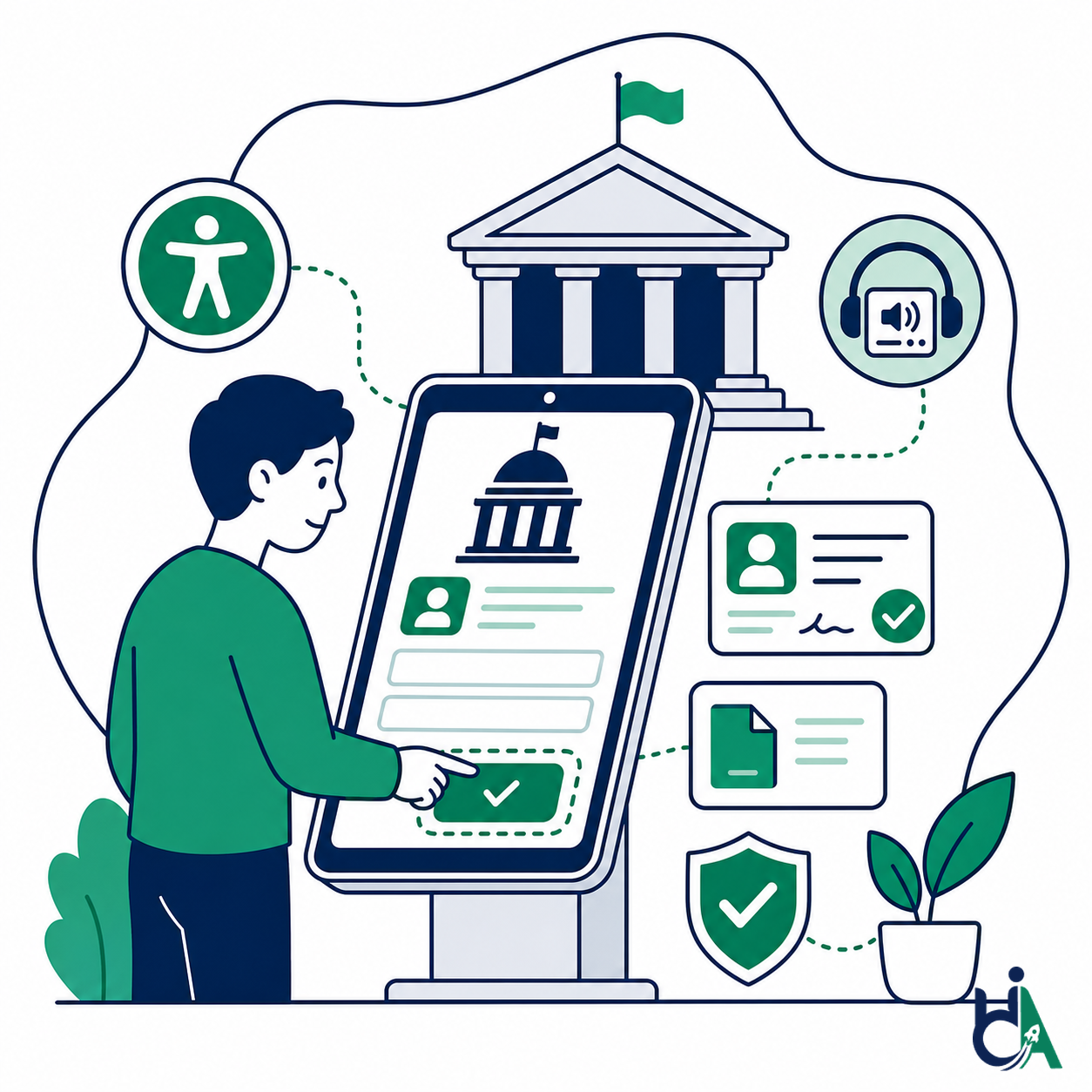
Federal Agencies
Federal agencies and vendors need Section 508-aligned digital services, accessible websites, applications, documents, procurement support, and governance practices.
- Section 508
- Public websites
- Applications
- Procurement

government accessibility services
Accessible Digital Government for Every Citizen. HalfAccessible helps government agencies, municipalities, public institutions, and public service organizations create accessible websites, portals, applications, and digital documents that meet WCAG and public-sector accessibility requirements.
Government accessibility and public sector accessibility are central to equal access, inclusive digital transformation, public trust, citizen self-service, compliance with accessibility policies, and better usability for everyone.
Government websites often deliver essential services such as tax payments, licensing, healthcare, education, transportation, emergency information, public records, benefits applications, permits, and citizen service requests. That makes accessibility a core part of public service delivery, not an optional website improvement.
HalfAccessible helps agencies, municipalities, public institutions, and public-sector vendors improve digital government accessibility through WCAG 2.2 audits, Section 508 consulting, accessibility remediation, government PDF accessibility, VPAT support, procurement reviews, screen reader testing, and long-term accessibility governance.
We support federal, state, local, municipal, public institution, public service, transportation, utility, education, healthcare, library, and government contractor teams that deliver essential digital services.
Federal agencies and vendors need Section 508-aligned digital services, accessible websites, applications, documents, procurement support, and governance practices.
State agencies need accessible portals, benefits applications, licensing, tax services, documents, dashboards, and digital transformation programs.
Cities, counties, municipalities, and city councils need accessible citizen services, forms, council content, notices, public records, and department pages.
County governments manage permits, property records, public health information, emergency updates, payments, forms, and accessible service directories.
Public higher education needs accessible public websites, student services, procurement, documents, forms, portals, and Section 508 or WCAG-aligned vendor review.
Public healthcare organizations need accessible patient information, portals, forms, location content, emergency notices, documents, and service scheduling.
Libraries need accessible catalogs, events, calendars, account flows, digital resources, documents, location pages, and public service information.
Transportation agencies need accessible route information, transit maps, alerts, trip planning, schedules, fares, service changes, and mobile experiences.
Public utilities need accessible billing, outage maps, payment systems, service requests, forms, notifications, account portals, and emergency updates.
Vendors serving the public sector need VPATs, ACRs, procurement readiness, accessibility testing, documentation, and remediation support.
Museums, commissions, authorities, boards, and public service organizations need accessible websites, documents, calendars, media, and public participation tools.
Emergency services need accessible alerts, warnings, maps, public notices, instructions, contact information, and status updates that work across devices and assistive technologies.
Our services cover WCAG audits, Section 508 consulting, remediation, PDF accessibility, VPAT documentation, procurement support, accessibility training, and long-term governance.
We audit public sector websites, citizen portals, online applications, forms, PDFs, mobile apps, intranets, procurement portals, and service workflows against WCAG 2.2 AA. Testing includes automated testing, manual testing, screen reader testing, keyboard testing, and user journey review.
Section 508 applies to U.S. federal agencies and many vendors supplying digital products or services to them. It is built around WCAG-based accessibility requirements. We support accessibility roadmaps, procurement readiness, policy guidance, vendor reviews, documentation, and governance planning.
We support remediation for React, Angular, Next.js, ASP.NET, Drupal, WordPress, SharePoint, and custom government platforms. We help teams fix forms, dialogs, tables, maps, PDFs, navigation, focus management, ARIA, headings, and component patterns.
We remediate government forms, annual reports, policies, regulations, budget reports, procurement documents, meeting agendas, notices, election documents, public records, and downloadable resources.
We provide VPATs, Accessibility Conformance Reports, accessibility statements, issue summaries, remediation documentation, and support for software procurement, vendor evaluation, and public-sector accessibility review.
We provide accessibility strategy, governance, design reviews, developer support, accessibility training, QA support, document workflow guidance, procurement language, and ongoing accessibility partnership.
We help agencies and vendors align with WCAG, Section 508, PDF/UA, VPAT/ACR documentation, ADA context, and public-sector accessibility expectations.
Primary technical accessibility standard for government websites, portals, forms, applications, and digital services.
U.S. federal accessibility requirement built around WCAG-based standards for agencies and many vendors serving them.
Important accessibility context for state, local, municipal, public institution, and public service websites.
Relevant standards and legal context for public-sector digital services and vendors in European markets.
Document accessibility guidance for public documents, forms, reports, budgets, notices, policies, and procurement files.
Procurement documentation used to evaluate accessibility conformance of public-sector software and vendors.
We audit public websites, citizen portals, service portals, online applications, forms, documents, procurement systems, intranets, mobile apps, and resident service journeys.
The largest public-sector accessibility risks often appear in citizen service portals, online forms, PDFs, procurement portals, maps, search, navigation, emergency alerts, meetings, and governance.
Citizen portal accessibility is essential because portals often handle benefits, permits, licensing, taxes, public records, service requests, messages, and account dashboards. We test login, dashboards, service requests, notifications, secure messaging, status updates, account settings, and multi-step transactions.
Accessible citizen portals help residents complete essential public services independently without relying on phone calls, in-person visits, or assistance from others.
Government forms include permit applications, license renewals, tax filing, benefit applications, complaint forms, public records requests, registrations, and public comment submissions. Common problems include missing labels, poor validation, keyboard traps, CAPTCHA, timeouts, confusing instructions, inaccessible required fields, and unclear error recovery.
Government PDF accessibility is a major public sector need. We remediate policies, reports, meeting agendas, budget documents, forms, notices, election documents, annual reports, regulations, procurement documents, and downloadable resources.
Accessible public documents require proper tags, reading order, headings, table structure, form fields, bookmarks, alt text, language settings, and screen reader-friendly export workflows.
Procurement portals need accessible vendor registration, bid submission, contract downloads, file uploads, document review, status updates, messaging, and deadline information. We also help agencies evaluate third-party software through VPATs, ACRs, accessibility requirements in RFPs, and vendor accessibility reviews.
Government maps include property maps, transit maps, emergency maps, public facility maps, zoning maps, utility outage maps, and polling place maps. We test keyboard navigation, labels, focus order, zoom controls, filters, results panels, and accessible alternatives such as searchable lists and downloadable text summaries.
Large government websites often have mega menus, department directories, site search, breadcrumbs, language switching, audience pathways, and deep content structures. We review whether residents can find services, understand where they are, switch language options, and navigate without visual-only cues.
Accessible emergency alerts require live announcements, status updates, visible focus, color-independent messaging, readable text, proper heading structure, persistent access, and mobile usability. Critical information should not rely on color, animation, or inaccessible scripts.
Public meetings involve live streams, video captions, meeting recordings, public notices, downloadable agendas, minutes, transcripts, chat or comment features, and calendar listings. We review media controls, captions, transcripts, document accessibility, and meeting information for public participation.
Citizen services accessibility covers benefits applications, licensing, taxes, permits, voter services, complaints, public records, appointments, payments, and department contact flows. We test complete journeys so residents can start, save, submit, and track service requests.
Government accessibility requires more than a one-time audit. We help create governance frameworks with accessibility policy, procurement requirements, design reviews, development standards, QA testing, staff training, document workflows, monitoring, and recurring validation.
Use these resources and related industry hubs to strengthen accessibility across public services, procurement, documents, portals, and connected digital systems.
Book a consultation for your public website, citizen portal, forms, documents, procurement system, mobile app, intranet, or Section 508 support needs.
Schedule ConsultationAnswers to common questions about government website accessibility, Section 508, WCAG, public-sector portals, forms, mobile apps, PDFs, VPATs, procurement, intranets, multilingual websites, training, and governance.
Government website accessibility means residents, visitors, staff, and vendors can use public-sector websites, portals, forms, documents, mobile apps, and digital services with assistive technology, keyboard navigation, zoom, captions, and accessible content.
Section 508 is a U.S. federal accessibility requirement for federal agencies and many vendors supplying digital products or services to them. It is built around WCAG-based accessibility requirements.
WCAG provides the technical criteria used to evaluate accessible content, navigation, forms, documents, media, portals, and applications. Many government accessibility policies reference WCAG directly or indirectly.
Yes. We audit citizen portals, service portals, tax portals, procurement portals, employee intranets, dashboards, secure login, notifications, messaging, and service request workflows.
Yes. We test permit applications, license renewals, tax filing, benefit applications, complaint forms, public records requests, and other multi-step government forms.
Yes. We test public-sector mobile apps and responsive web services on iOS and Android, including screen reader support, touch targets, labels, zoom, orientation, alerts, and navigation.
Yes. We remediate government forms, annual reports, policies, regulations, budget reports, procurement documents, meeting agendas, notices, election documents, and public records.
Yes. We provide VPATs and Accessibility Conformance Reports for software vendors, public-sector procurement, government contractors, and digital product evaluations.
Yes. We help with VPAT review, accessibility requirements in RFPs, vendor evaluation, procurement readiness, accessibility documentation, and third-party software review.
Yes. We can audit employee intranets, SharePoint sites, staff portals, internal forms, HR workflows, dashboards, training content, and internal documents.
Government websites should be audited before redesigns, CMS migrations, portal launches, major form changes, procurement reviews, and periodically as content, documents, and services change.
Yes. We can test multilingual navigation, language switching, translated pages, labels, forms, content structure, language attributes, and screen reader behavior.
Yes. We provide training for content editors, designers, developers, QA teams, procurement staff, document teams, and accessibility coordinators.
Yes. We help build governance frameworks with policy, procurement requirements, design reviews, development standards, QA testing, document workflows, training, monitoring, and recurring validation.
Yes. We test property maps, transit maps, emergency maps, facility maps, outage maps, polling place maps, controls, filters, keyboard access, and accessible alternatives.
Yes. We test emergency alerts, live announcements, status updates, color-independent messaging, mobile behavior, focus handling, and persistent access to critical information.
Yes. We review live streams, captions, meeting recordings, public notices, agendas, minutes, transcripts, calendar listings, and downloadable materials.
Yes. We test fee payment, tax payment, utility billing, receipt pages, validation errors, payment gateways, focus order, labels, and confirmation messages.
Yes. We support vendors serving the public sector with accessibility audits, remediation, VPATs, ACRs, procurement readiness, and Section 508-aligned documentation.
Yes. We review CAPTCHA alternatives, session timeouts, warnings, save-and-resume flows, focus recovery, and error prevention for online government forms.
Yes. We can help public-sector organizations prepare clear accessibility statements that describe commitments, standards, known limitations, contact pathways, and feedback processes.
Yes. Retesting confirms whether fixes resolve barriers across websites, portals, forms, PDFs, maps, media, mobile apps, and service workflows without introducing regressions.
Tell us about your website, web application or mobile application and we will follow up shortly.
Indicates a required field.
Your information is kept private and never shared with third parties.