
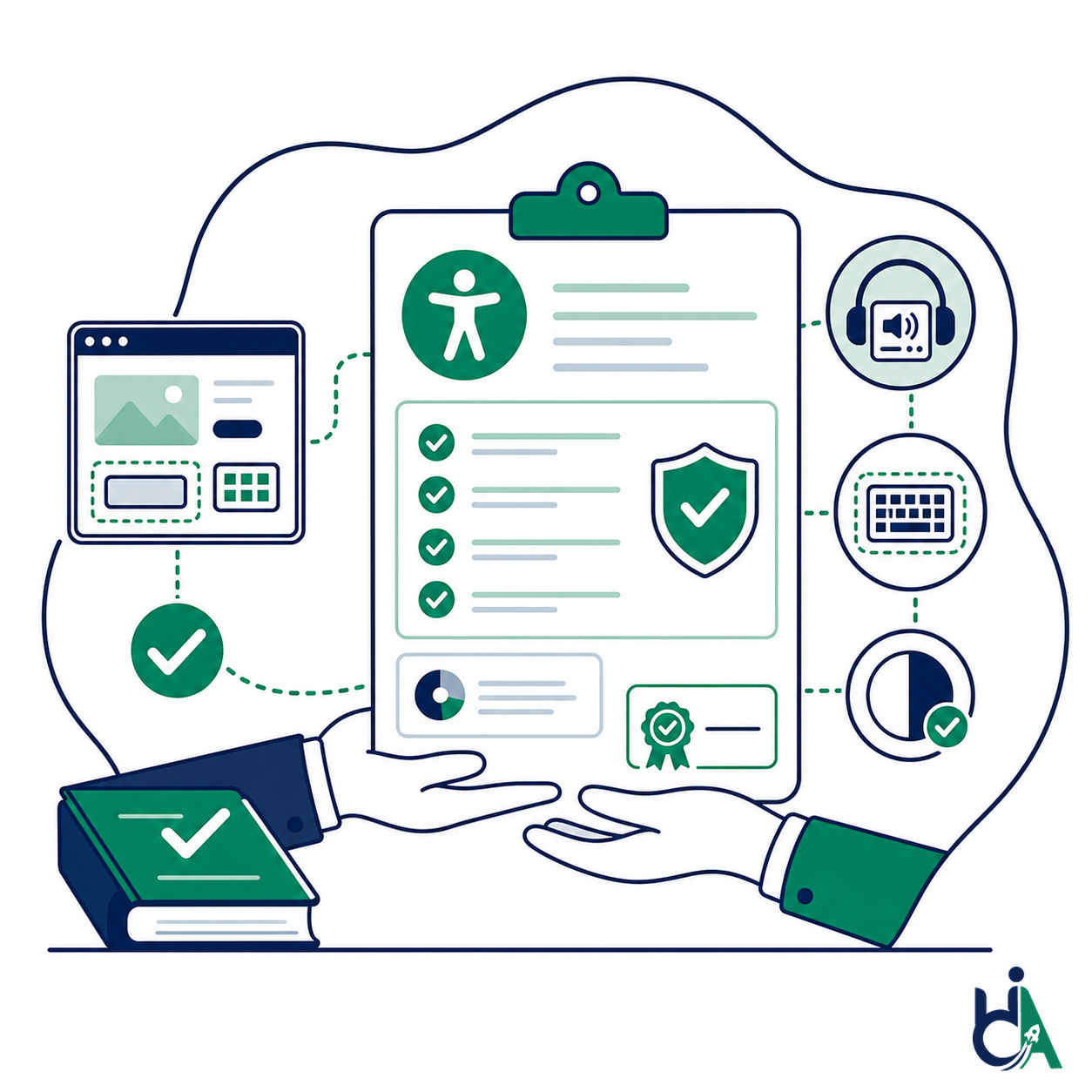
VPAT® & Accessibility Conformance Report (ACR) Services

Need a VPAT® or Accessibility Conformance Report (ACR) for your software, SaaS platform, website, mobile app, or digital product? HalfAccessible performs comprehensive accessibility testing and prepares evidence-based VPAT® documentation that helps organizations demonstrate accessibility conformance during procurement.

Quick Answer

Accessibility Service Summary

Quick Answer

A VPAT® (Voluntary Product Accessibility Template) is the standardized template published by the Information Technology Industry Council (ITI). After accessibility testing is completed and the template is filled in, the finished document is called an Accessibility Conformance Report (ACR). Procurement teams use ACRs to understand how well a product conforms to accessibility standards such as WCAG, Section 508, and EN 301 549. There is no official VPAT certification or pass/fail status.

In Simple Terms

Many buyers ask for a “VPAT,” but what they usually need is a completed Accessibility Conformance Report. The VPAT® is the blank template. The ACR is the completed, evidence-based report that explains how your product supports accessibility standards.

Key Takeaways

  • VPAT® is the template; ACR is the completed report
  • Based on comprehensive accessibility testing
  • Supports procurement, RFPs, and vendor reviews
  • Uses conformance terms such as Supports and Partially Supports
  • No official VPAT certification or pass/fail status
CPWA, CPACC and WAS Certified Specialists
WCAG 2.2 Accessibility Experts
Human-Verified Accessibility Testing
Enterprise Procurement Experience
Government and Higher Education Support
Detailed ACR Documentation
Procurement Readiness

Why Your Organization May Need a VPAT®

Many organizations are asked to provide accessibility documentation before a purchase can be approved.

Government procurement

Public sector buyers often require accessibility documentation before software, SaaS platforms, websites, mobile apps, or digital products can move forward in procurement.

Enterprise software sales

Enterprise buyers use ACRs to evaluate product accessibility risk, compare vendors, answer internal compliance questions, and document procurement decisions.

University purchasing

Higher education institutions often request VPAT® documentation for learning tools, student systems, websites, portals, and digital services.

Healthcare procurement

Healthcare organizations need accessibility documentation for patient portals, provider platforms, administrative software, documents, and digital services.

RFP responses

A current, evidence-based ACR can help sales and proposal teams respond to accessibility requirements in RFPs and vendor questionnaires.

Compliance and security reviews

Vendor reviews increasingly include accessibility questions alongside security, privacy, legal, and compliance checks.

Documentation Scope

What We Document

We prepare VPAT® and ACR documentation for software, SaaS platforms, websites, mobile apps, desktop software, and digital products.

SaaS Platforms

CRM, ERP, HR software, project management tools, analytics dashboards, AI platforms, admin consoles, onboarding flows, and enterprise account settings.

Web Applications

Customer portals, enterprise software, internal systems, authenticated workflows, admin dashboards, complex forms, data tables, dialogs, and notifications.

Websites

Corporate websites, government websites, educational websites, healthcare websites, product marketing pages, documentation sites, and customer support portals.

Mobile Apps

Native iOS, native Android, hybrid apps, React Native, Flutter, progressive web apps, mobile forms, gestures, orientation, and touch interactions.

Desktop Software

Windows applications, macOS applications, Electron apps, Java applications, installed enterprise tools, developer utilities, and business software.

Digital Products

Cloud platforms, developer tools, business software, customer portals, content systems, documentation platforms, and multi-platform product suites.

WCAG Edition

Ideal for commercial software, SaaS platforms, websites, mobile apps, and digital products where WCAG conformance is the primary reporting need.

Section 508 Edition

Used for U.S. federal procurement and organizations selling products or services into federal accessibility review processes.

EU Edition

Used for EN 301 549 reporting and organizations responding to European public sector or accessibility procurement requirements.

International Edition

Combines WCAG, Section 508, and EN 301 549 into one report for organizations serving multiple markets or procurement contexts.

Testing Coverage

Accessibility Testing Included

The ACR is supported by actual testing, not generic statements or automated scans alone.

Keyboard Navigation

We evaluate whether users can navigate, operate controls, avoid keyboard traps, see focus indicators, complete workflows, and use custom widgets without a mouse.

Screen Reader Compatibility

We test names, roles, states, reading order, announcements, form instructions, dialogs, dynamic updates, and key workflows with assistive technologies.

Forms

We evaluate labels, instructions, validation, errors, required fields, autocomplete, grouping, authentication, and data entry workflows that affect procurement risk.

Authentication

Login, MFA, password reset, session timeout, account creation, and secure workflows are tested when they are part of the product scope.

Tables

We evaluate data tables, headers, relationships, sorting controls, responsive behavior, and complex enterprise reporting patterns.

Dialogs And Menus

We test focus management, keyboard behavior, accessible names, state changes, escape behavior, and screen reader output for interactive components.

Charts And Dynamic Content

We evaluate charts, notifications, status messages, loading indicators, live regions, route changes, and updates in single-page applications.

Mobile Accessibility

Mobile scope can include VoiceOver, TalkBack, touch target size, zoom, orientation, gesture alternatives, mobile forms, and responsive design.

PDFs And Documents

When included in scope, we test tagged PDFs, reading order, forms, bookmarks, links, tables, alt text, and document structure.

Decision Support

How To Choose The Right Accessibility Service

Feature Automated Testing Manual Testing
VPAT® template Blank standardized template Completed into an ACR after evaluation
Accessibility testing Automated analysis included Manual WCAG and assistive technology testing included
Conformance terms Not a pass/fail score Supports, Partially Supports, Does Not Support, Not Applicable
Procurement use Requested by buyers Used to understand product accessibility status
Official certification No official VPAT certification Evidence-based reporting is the goal

Helpful Statistics

  • VPAT® is a registered service mark of the Information Technology Industry Council. HalfAccessible prepares the completed Accessibility Conformance Report based on testing and the selected VPAT® edition. ITI VPAT®
  • Manual testing improves ACR accuracy. Automated tools alone cannot evaluate many criteria that procurement teams care about, including screen reader behavior, keyboard flow, and user journeys. Manual Accessibility Testing

Choose This Service If You Need

  • Does your product support WCAG 2.2?
  • Do you have a current ACR?
  • Which assistive technologies were used?
  • Which user journeys were tested?
  • Is testing manual or automated?
  • How current is the evaluation?
  • What accessibility limitations remain?
  • Is remediation planned?
VPAT® Methodology

Our VPAT® Process

We scope, test, evaluate, document, review, and deliver a procurement-ready Accessibility Conformance Report.

Editions And Technologies

VPAT® Editions and Technologies We Support

NVDA JAWS VoiceOver TalkBack Keyboard testing Browser zoom Mobile screen readers React Next.js Angular Vue WordPress Drupal Shopify Magento Flutter React Native ASP.NET Java Laravel
Deliverables

What’s Included

VPAT® Completion

The selected VPAT® edition is completed with product-specific conformance details and evidence-based remarks.

Accessibility Conformance Report (ACR)

The final completed report explains product accessibility support for applicable criteria and standards.

WCAG Mapping

Findings and remarks are mapped to relevant WCAG criteria where applicable.

Section 508 Mapping

Section 508 criteria are documented when the selected VPAT® edition requires them.

EN 301 549 Mapping

EN 301 549 criteria are documented for EU or international reporting needs.

Evaluation Methodology

The report explains how testing was performed, including manual review, automated analysis, assistive technology testing, and scope notes.

Detailed Remarks

Conformance labels are supported by clear explanations, known limitations, and product-specific details.

Procurement-Ready Documentation

The final ACR can support RFP responses, enterprise sales, procurement reviews, and accessibility questionnaires.

SaaS Companies

VPAT® and ACR support for B2B platforms, dashboards, admin tools, analytics, AI platforms, and enterprise products.

Healthcare Software

Documentation for patient portals, provider systems, healthtech platforms, documents, and procurement reviews.

Government Vendors

Support for vendors responding to government accessibility requirements and Section 508 procurement expectations.

Financial Software

Documentation for banking, insurance, financial reporting, account dashboards, and enterprise financial products.

Educational Technology

ACRs for learning platforms, student systems, content platforms, university tools, and education procurement.

Enterprise Platforms

Documentation for internal systems, customer portals, business software, developer tools, and technology vendors.

CPWA-Certified Accessibility Specialists

Your ACR is prepared by accessibility professionals who understand WCAG, procurement expectations, testing evidence, and product constraints.

8+ Years of Accessibility Experience

HalfAccessible brings practical testing, remediation, documentation, and consulting experience across many product types and industries.

Procurement-Focused Documentation

We write remarks and explanations that procurement teams, enterprise buyers, legal teams, and product stakeholders can understand.

Manual Accessibility Testing

Documentation is supported by human review, keyboard testing, screen reader testing, and product-specific evaluation methods.

Developer-Friendly Findings

If issues need remediation before finalizing the ACR, we provide clear findings and practical recommendations.

Ongoing Update Support

We can help update ACR documentation after product changes, remediation work, new releases, or expanded scope.

Procurement Questions

Common Procurement Questions We Help Answer

  • Does your product support WCAG 2.2?
  • Do you have a current ACR?
  • Which VPAT® edition was used?
  • Which assistive technologies were used?
  • Which user journeys were tested?
  • Is testing manual, automated, or both?
  • How current is the evaluation?
  • Which limitations remain?
  • Is remediation planned?
  • Who can answer buyer questions?
  • Which product version was evaluated?
  • Which platforms were included?

Need a Procurement-Ready VPAT® or Accessibility Conformance Report?

Whether you are responding to an RFP, selling to enterprise customers, or preparing for government procurement, HalfAccessible can provide an evidence-based VPAT® and ACR backed by comprehensive accessibility testing.

Request VPAT® & ACR Services
VPAT® and ACR FAQs

Frequently Asked Questions

Answers to common questions about VPAT® templates, Accessibility Conformance Reports, testing, conformance terms, procurement, and remediation support.

What is the difference between a VPAT® and an ACR?

A VPAT® is the blank template published by ITI. Once the template is completed after evaluation, the finished document is called an Accessibility Conformance Report, or ACR.

Is a VPAT® a certification?

No. There is no official VPAT certification or pass/fail status. A completed ACR documents how a product supports applicable accessibility criteria based on evaluation.

Which VPAT® edition do I need?

The right edition depends on your procurement market. WCAG is common for commercial products, Section 508 for U.S. federal procurement, EU for EN 301 549, and International for multiple markets.

How long does it take to prepare an ACR?

Timeline depends on product complexity, platforms, user journeys, documentation needs, and whether remediation is required before final delivery.

Can you prepare a VPAT® without testing?

We do not recommend completing an ACR without evidence. Accurate documentation should be supported by accessibility testing, product review, and clear evaluation methods.

Do you test with screen readers?

Yes. Depending on scope, we test with NVDA, JAWS, VoiceOver, TalkBack, keyboard navigation, and other relevant methods.

Can you update an existing VPAT®?

Yes. We can review an existing ACR, retest the product, update conformance remarks, and document changes since the last evaluation.

How often should an ACR be updated?

An ACR should be updated after meaningful product changes, major releases, remediation work, expanded scope, or when buyers request current documentation.

Do enterprise customers require VPATs?

Many enterprise customers request VPAT® or ACR documentation during procurement, vendor review, RFP responses, or accessibility questionnaires.

Can you prepare documentation for SaaS products?

Yes. We prepare ACR documentation for SaaS platforms, web applications, dashboards, admin systems, account settings, and authenticated user journeys.

Do you support government procurement?

Yes. We support Section 508 and procurement-focused accessibility documentation for vendors selling to U.S. federal, public sector, and government-related buyers.

Can you create VPATs for mobile apps?

Yes. We can evaluate iOS, Android, hybrid apps, React Native, Flutter, and mobile user journeys for ACR documentation.

Do you assist with remediation before finalizing the report?

Yes. If testing identifies issues, we can help remediate or advise your team before finalizing an updated ACR.

What conformance terms are used in an ACR?

Common terms include Supports, Partially Supports, Does Not Support, and Not Applicable. Each should be supported by meaningful remarks.

Can you help answer procurement questions?

Yes. We can help teams answer buyer questions about testing scope, assistive technologies, product limitations, known issues, and remediation plans.

What product information is included?

An ACR typically includes product name, version, report date, contact information, evaluation methods, standards tested, and conformance tables.

Which standards can be included?

Depending on the VPAT® edition, reporting can include WCAG, Section 508, EN 301 549, or a combination of standards.

Do you include known limitations?

Yes. Transparent remarks and known limitations help procurement teams understand product status and planned improvements.

Can you prepare ACRs for websites?

Yes. We can prepare documentation for websites, web apps, SaaS products, mobile apps, desktop software, documents, and digital platforms.

Can you evaluate password-protected products?

Yes. We can evaluate authenticated applications when test credentials, representative workflows, and scoped user roles are provided.

Do you provide an audit report too?

Yes. We can provide supporting audit findings, executive summaries, remediation notes, and retest documentation where needed.

Can you support legal or compliance teams?

Yes. We can walk through the report with legal, compliance, product, engineering, sales, procurement, or leadership teams.

Is VPAT® a trademark?

Yes. VPAT® is a registered service mark of the Information Technology Industry Council. The completed document is an Accessibility Conformance Report.

Can you prepare an ACR for multiple platforms?

Yes. The scope can include web, mobile, desktop, document, or multi-platform experiences, with clear notes about what was evaluated.

How do we start?

Send your product URL or access details, target buyers, required VPAT® edition, product version, platforms, key workflows, and deadline. We will recommend a scope and timeline.