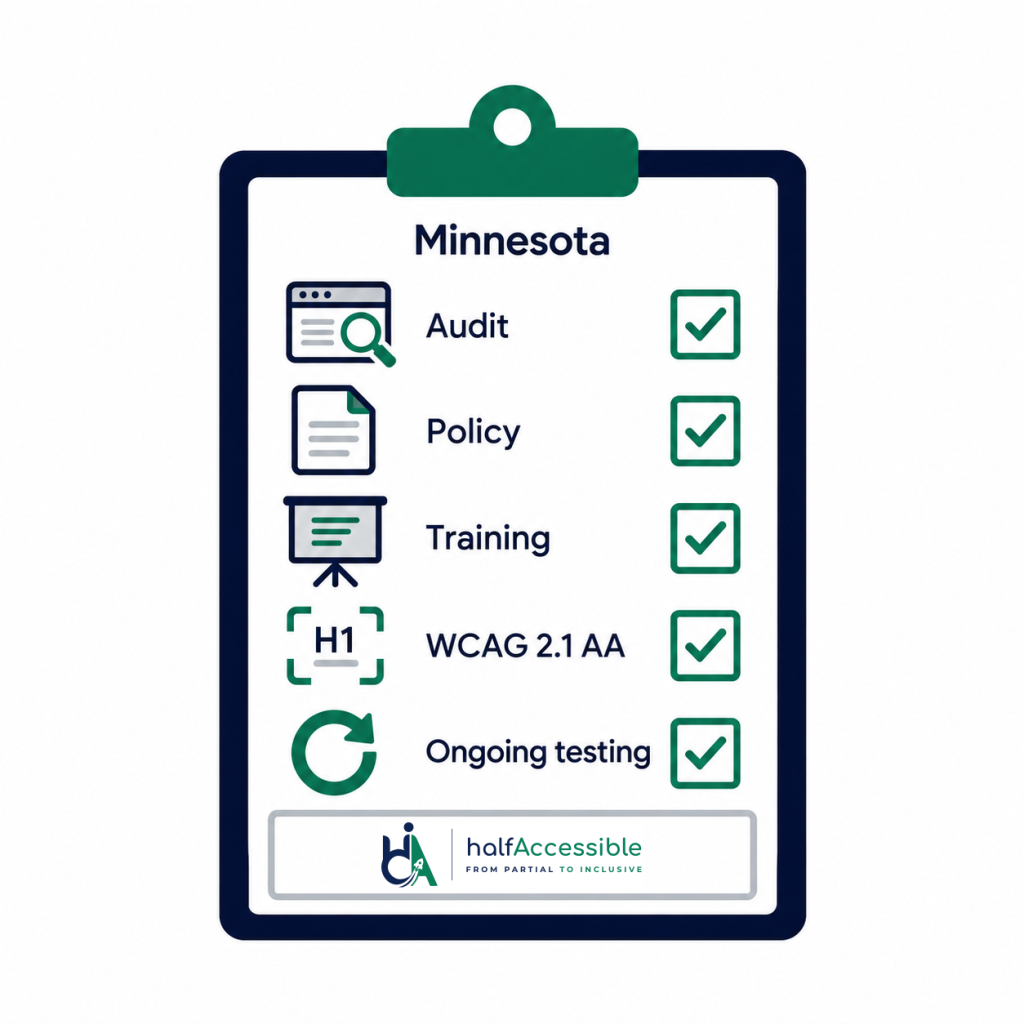
Minnesota ADA website lawsuits are not a one-off against a household brand. They are a repeatable filing model that pairs ADA Title III with the Minnesota Human Rights Act, names major retail sites, and asks for a detailed accessibility programme — audit, policy, training, WCAG 2.1 Level AA and ongoing testing — rather than a class payout.
That model made fresh headlines in September 2026. On 15 September 2026, Dalton v. Groupon, Inc., No. 0:26-cv-04014, was filed in the U.S. District Court for the District of Minnesota. Open Class Actions reported on 20 September that the complaint alleges groupon.com is inaccessible to screen reader users and that the same plaintiff filed 139 comparable cases in that district in 2025, plus roughly twenty more in the month before Groupon.
This guide is written by accessibility testers who audit retail sites for a living. It is not legal advice. It explains what Minnesota ADA website lawsuits mean for online retailers, what these complaints typically ask companies to do, and a practical preparedness checklist grounded in WCAG and assistive-technology testing.
What Happened in Dalton v. Groupon
According to Open Class Actions’ Groupon case page, the complaint was filed on 15 September 2026 against Groupon, Inc. It alleges that groupon.com is not fully and equally accessible to people who are blind or have low vision and who use screen reader software, in violation of Title III of the Americans with Disabilities Act (42 U.S.C. § 12181 et seq.) and the Minnesota Human Rights Act.
The barriers described are allegations. No court has found Groupon liable, no class has been certified, and these Minnesota ADA website lawsuits are not structured to pay class members. Open Class Actions is explicit: the class is pleaded under Rule 23(b)(2) for injunctive relief, not individual damages.
The alleged issues, as summarised by Open Class Actions, include unclear link and button purpose, confusing screen reader narration, menus a screen reader does not recognise, missing text equivalents for important images, and information conveyed only through visual cues. Those categories will look familiar to anyone who has run screen reader accessibility testing on a retail site.
Groupon is also not isolated. Between mid-August and mid-September 2026, Open Class Actions reports the same plaintiff filed against Nike, H&M Fashion USA, Marc Jacobs, Sportsman’s Warehouse, iHerb, Untuckit, Rhone, VEJA, Proper Cloth, Paul Fredrick, Impressions Vanity, Johnnie-O, Messika USA, Marubeni America and others — then Groupon. The common thread is a consumer-facing retail website.
For definitions, see our glossaries on ADA Title III and web accessibility lawsuit. For national trends, see our 2026 ADA website lawsuit statistics.
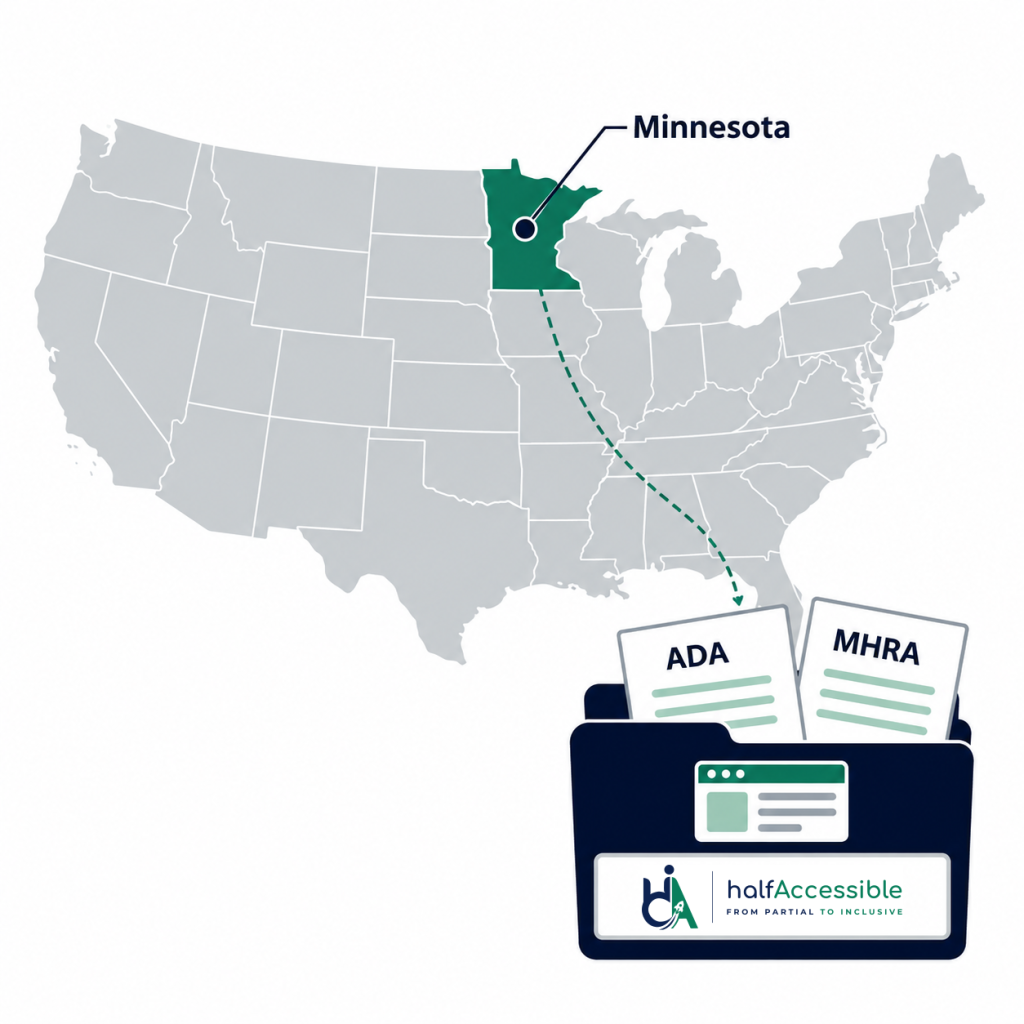
Why Minnesota: ADA Title III Plus the MHRA
Title III of the ADA does not authorise damages for private plaintiffs in these website cases. A successful Title III plaintiff generally seeks an injunction and attorney’s fees. That is one reason many federal accessibility suits resolve around remediation commitments rather than consumer payouts.
Minnesota changes the negotiating picture. Open Class Actions explains that these Minnesota ADA website lawsuits pair the federal ADA claim with a Minnesota Human Rights Act claim and ask for damages, a damages multiplier, and a civil penalty payable to the State of Minnesota. The civil penalty, if awarded, goes to the state — not to class members — and the class itself remains an injunctive Rule 23(b)(2) class.
That combination helps explain why filings cluster in the District of Minnesota even when defendants are national brands headquartered elsewhere. EcomBack’s 2026 mid-year ADA website lawsuit report also shows Minnesota as an active venue: 120 ADA website lawsuits in January–June 2026, up 42.86% from 84 in the same period of 2025.
That does not mean every filing will succeed. It does mean retail operators should treat Minnesota as a high-attention venue and prepare for complaints that seek both federal and state-law remedies.
Lesson 1: Complaints Are Allegations, Not Findings
The first lesson from Minnesota ADA website lawsuits is discipline about language. A filing is a plaintiff’s account of what happened on a particular visit. Open Class Actions stresses that none of the companies named in this wave has been found liable based on these complaints alone.
Treat the complaint as a risk signal and a testing brief, not a public verdict. Preserve the site as it was, document fixes, and commission a manual audit so counsel can separate real barriers from disputed ones. See our ADA demand letter glossary for the vocabulary that often appears before a filing.
Lesson 2: The Same Plaintiff Can File at Scale
Open Class Actions reports that the same plaintiff filed 139 cases in the District of Minnesota in 2025 and roughly twenty more in the month before the Groupon complaint. That pattern matches what accessibility teams already know about serial plaintiff activity nationally: a relatively small number of filers drive a large share of website cases.
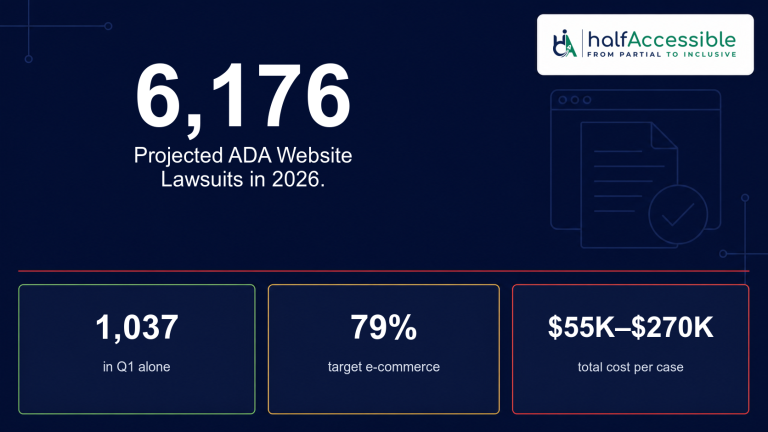
EcomBack’s mid-year 2026 data adds national context: about 2,045 ADA website lawsuits from January through June 2026 (+1.54% vs 2025), with Illinois leading and Minnesota among the more active secondary venues. The takeaway for retailers: assume a consumer site can be reviewed repeatedly, and that a one-time cleanup without process will not survive the next review.9:28 AMNew Bot
Lesson 3: Read the Relief Sought as a Programme Spec
For operators, the most useful part of Minnesota ADA website lawsuits is not the brand name in the caption. It is the injunctive relief template. Open Class Actions summarises what the Groupon complaint asks for, and the list reads like an accessibility operating model:
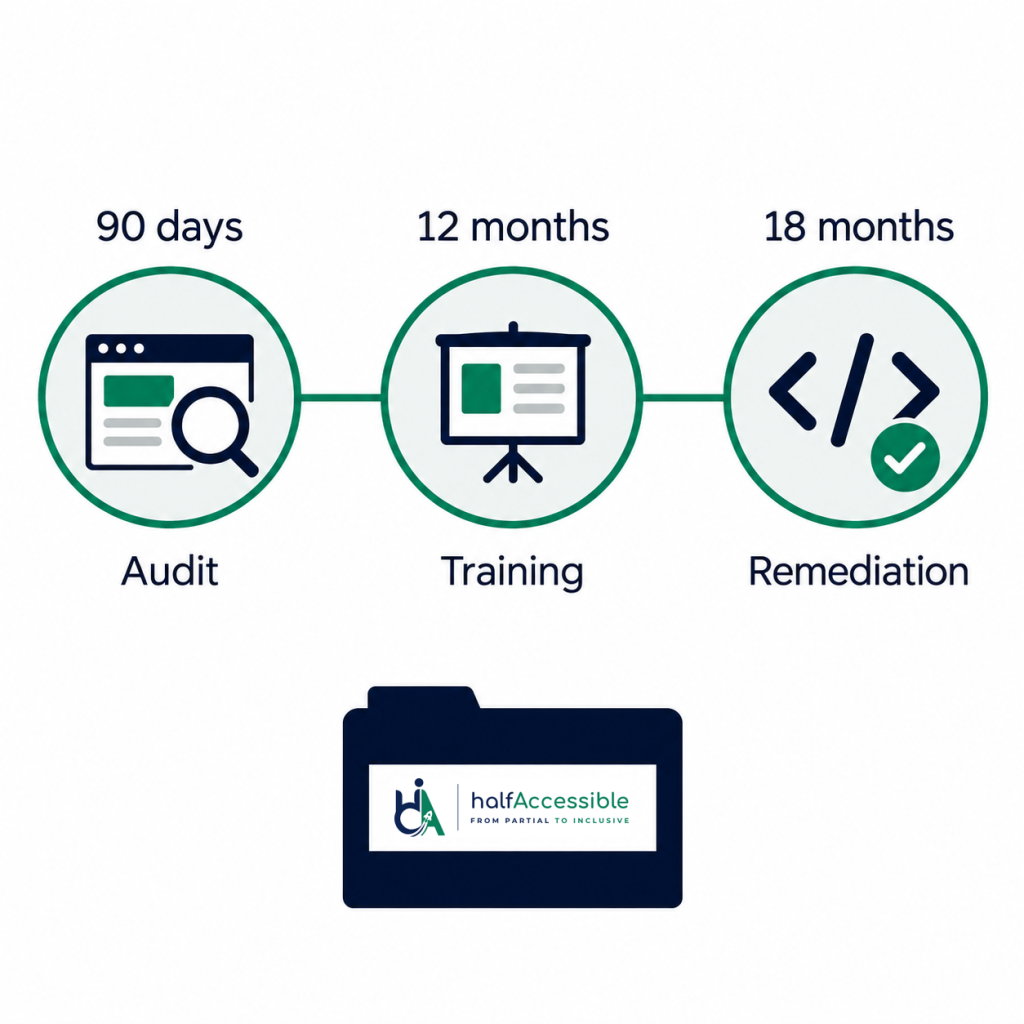
- Accessibility audit within 90 days — a time-boxed baseline of the live site.
- Written digital accessibility policy, including posting in the site header in the form pleaded.
- Corrective action strategy circulated to executives and contractors.
- Staff training within 12 months.
- Named staff member accountable for the policy.
- Vendor contracts requiring WCAG 2.1 Level AA for third-party work that touches the site.
- All published pages accessible within 18 months.
- Ongoing testing: monthly automated scans plus quarterly manual testing by disabled end users.
That last item is the one we emphasise in every programme review. Daily deals and seasonal campaigns reintroduce barriers unless accessibility lives in release. W3C WCAG 2.1 Level AA is the conformance target named in the pleadings Open Class Actions describes.
HalfAccessible’s accessibility audit services, ADA and Section 508 accessibility audit, accessibility remediation, accessibility training workshops, and accessibility monitoring and governance map onto that programme shape. See also our sample audit report.
Lesson 4: Retail and E-Commerce Sites Are the Pattern Match
The mid-August to mid-September defendant list spans apparel, outdoor retail, supplements, deals platforms and jewellery. The claim model works against any operator whose site is alleged to block screen reader users. Product grids, promo modules, location finders and deal carousels are where narration and keyboard failures show up in our audits — which is why Minnesota ADA website lawsuits keep landing on retail storefronts.
If you run on Shopify, treat the platform as context, not cover. EcomBack reports Shopify stores drew a large share of national ADA website lawsuits in H1 2026. We cover merchant-side failure modes in Is Shopify ADA Compliant? and our Shopify accessibility audit. The Minnesota wave is about any consumer storefront that can be tested with assistive technology.
Lesson 5: Overlays Are Not a Minnesota Shield
Nearly a quarter of mid-year 2026 ADA website lawsuits — 24.25%, or 496 of 2,045 filings — targeted sites that already had an accessibility widget installed, according to EcomBack. Widgets adjust presentation at run time; they do not reliably fix missing names, keyboard traps, or inaccessible checkout-adjacent components.
In April 2025, the FTC finalised an order requiring overlay vendor accessiBe to pay $1 million. See our article on accessibility overlays and ADA lawsuits. For Minnesota ADA website lawsuits, budget belongs in code, content, process and people — not in a toolbar that leaves barriers in place.
Lesson 6: Manual Testing With Disabled Users Is Explicitly in Scope
The Groupon complaint’s pleaded testing regime — monthly automated scans plus quarterly manual testing by disabled end users — matches what experienced programmes already do. Automated tools catch only a portion of WCAG issues. They cannot judge alt-text accuracy, deal-carousel narration, or whether a locations map works without vision.
A practical test stack for teams watching Minnesota ADA website lawsuits:
- Critical path: home, listing, product/offer, cart/checkout, account, search, location finder, contact.
- Automated baseline for contrast, missing labels and empty alt attributes.
- Keyboard-only pass — see our manual keyboard accessibility testing guide.
- Screen reader testing with NVDA, JAWS, VoiceOver and TalkBack on real flows.
- Disabled end-user sessions on a recurring cadence.
- Regression after major releases, because promo modules reintroduce debt fastest.
Lesson 7: Build the Preparedness Checklist Before You Need It
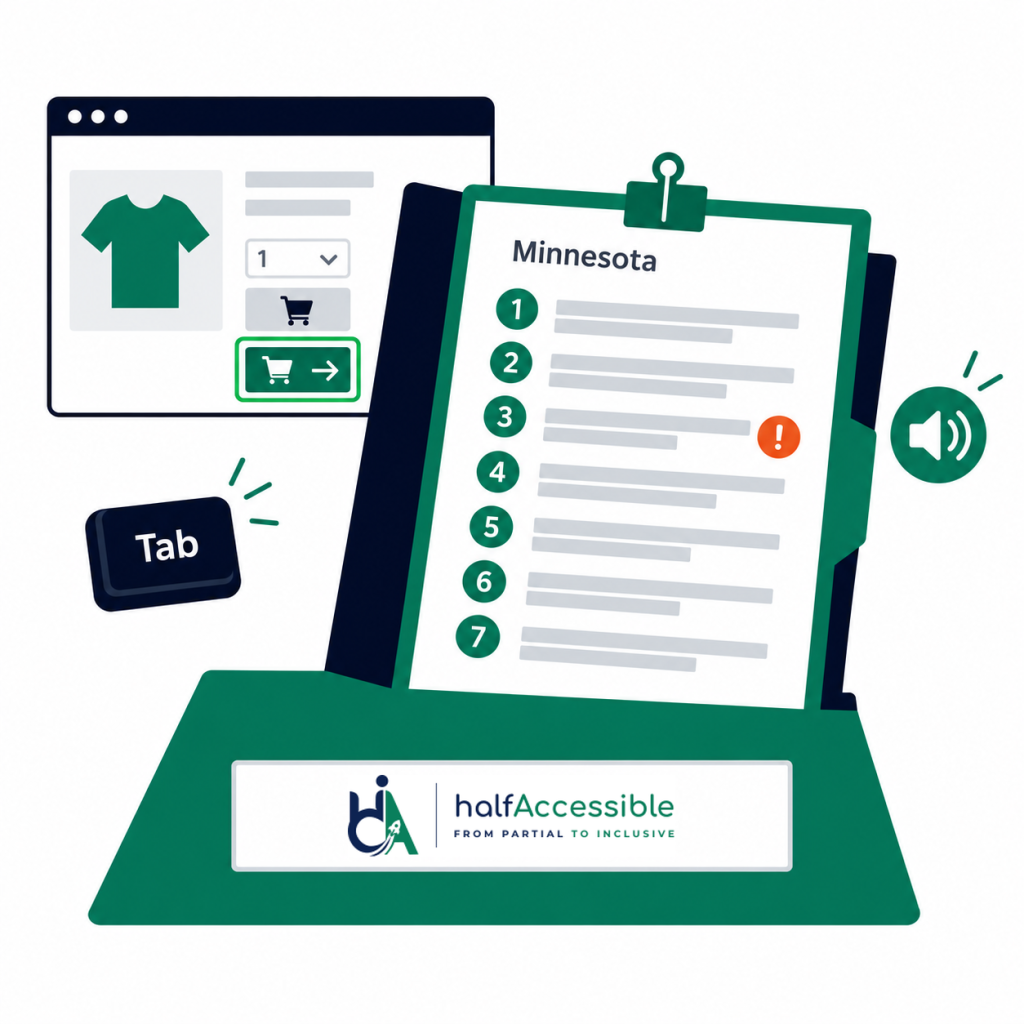
Here is a practical checklist we give retail teams when Minnesota is on their risk map. Adapt it with counsel; this is accessibility programme guidance, not legal advice.
| Priority | Action | Why it maps to Minnesota ADA website lawsuits |
|---|---|---|
| 1 | Commission a manual WCAG 2.1 AA audit of the live critical path | Matches the 90-day audit ask and gives counsel facts |
| 2 | Name an accessibility owner with budget and escalation rights | Matches the “named staff member” ask |
| 3 | Publish a truthful accessibility statement with a working contact route | Supports policy and customer feedback loops |
| 4 | Write a digital accessibility policy and socialise it with product, marketing, and vendors | Matches the written policy and corrective strategy asks |
| 5 | Put WCAG 2.1 Level AA into vendor and agency contracts | Matches the vendor-contract ask |
| 6 | Train content, design, and engineering within a 12-month plan | Matches the training ask |
| 7 | Fix purchase-blocking barriers first, then theme-wide issues, then content debt | Supports the 18-month published-pages horizon |
| 8 | Schedule monthly automated scans and quarterly manual / disabled-user testing | Matches the ongoing testing ask |
| 9 | Re-test after campaigns, theme updates, and new apps or widgets | Stops accessibility from decaying between audits |
| 10 | Do not install an overlay as your primary response | Widget-equipped sites still make up ~24% of mid-year suits |
For scoped help, book a consultation or see pricing. If you already have a demand letter, involve counsel immediately and use a manual audit as the factual backbone.
What These Suits Mean for Shoppers — and What They Do Not
Open Class Actions is blunt: class members in this Minnesota model should not expect a payout. Title III does not provide damages; the MHRA civil penalty, if awarded, goes to the state; and Rule 23(b)(2) is built for injunctive relief. The potential consumer benefit is a site that works with assistive technology — which blind and low-vision shoppers deserve. Executives should not confuse Minnesota ADA website lawsuits with cheque-mailing class actions. The pressure is remediation and programme maturity.