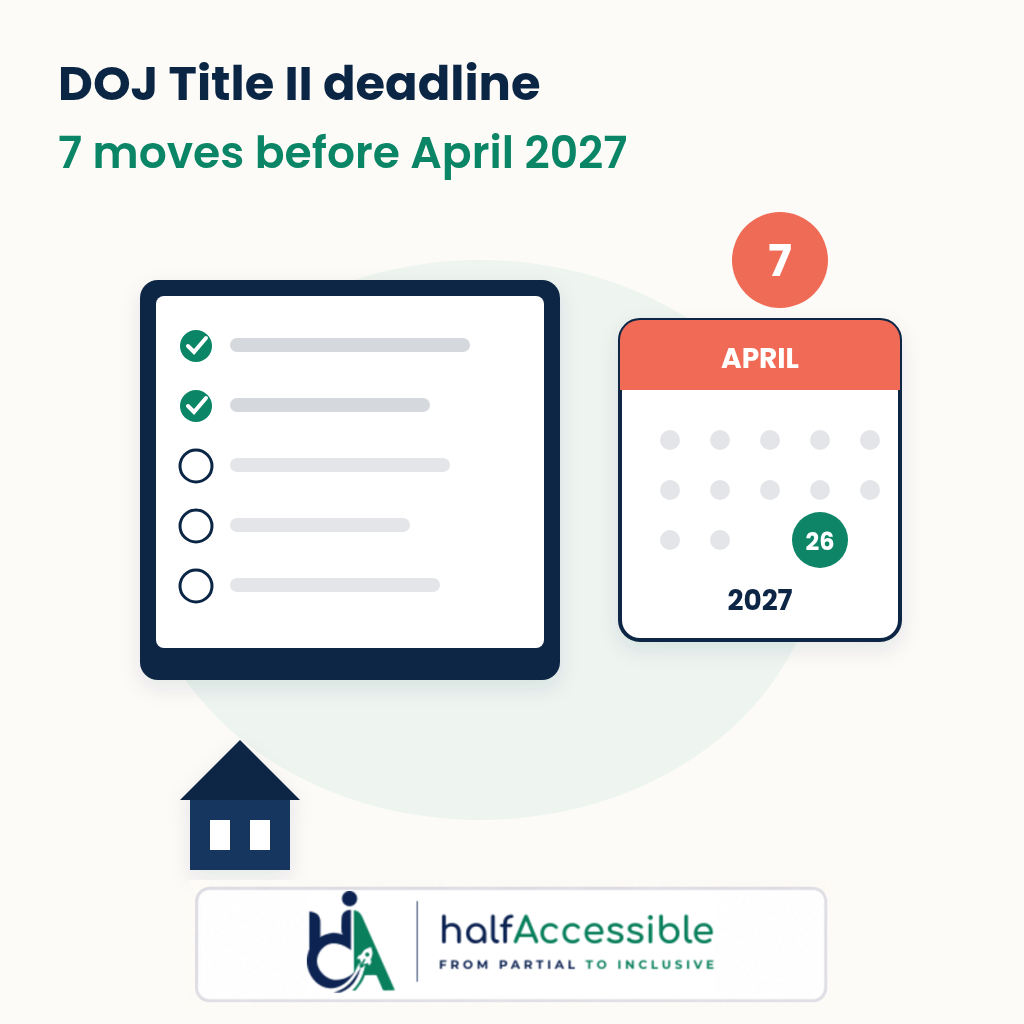
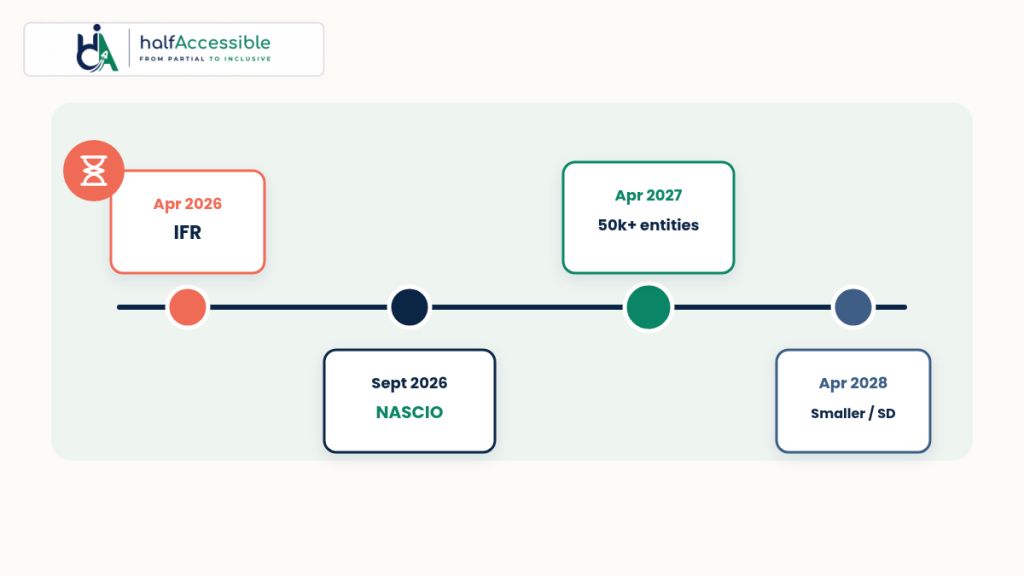
Short answer: The DOJ Title II web accessibility deadline moved by one year — to 26 April 2027 for public entities with a total population of 50,000 or more, and 26 April 2028 for smaller entities and special district governments. The technical standard did not change: web content and mobile apps that state and local governments provide or make available must still meet WCAG 2.1 Level AA. Private businesses under Title III got no extra time.
That extension is now the live calendar on ADA.gov’s Title II web rule fact sheet, which records the Department of Justice Interim Final Rule published in the Federal Register on 20 April 2026. Fresh urgency came at the 2026 NASCIO Annual Conference on 28 September 2026, where state accessibility leaders told StateScoop that delays do not erase civil-rights obligations — and that document remediation and high-traffic systems remain the top failure modes.
This guide is written by accessibility testers who audit government and public-sector digital services. It is not legal advice. It explains what the DOJ Title II web accessibility deadline actually changed, what NASCIO’s state officer survey shows about readiness, and a seven-move programme you can start this quarter.
What the DOJ Title II Web Rule Requires
Title II of the ADA requires state and local governments to make their services, programs, and activities accessible to people with disabilities — including services offered online and through apps. On 24 April 2024, the Department of Justice published a final rule that made that duty concrete for web content and mobile apps: adopt WCAG 2.1 Level AA as the technical standard for content the public entity provides or makes available, directly or through contractual, licensing, or other arrangements.
ADA.gov’s fact sheet is explicit about scope. Covered entities include state and local agencies, public schools and universities, courts, elections offices, public hospitals, libraries, parks programmes, and transit agencies. If a county parks page is built by a vendor, the county still owns the WCAG 2.1 AA obligation. If a city parking app is run by a private company under contract, the city still owns it.
For how Title II sits next to Title III, Section 508, the EAA and VPATs, see our accessibility framework comparison. For Title III private-sector lawsuit patterns (a different statute), see 2026 ADA website lawsuit statistics and Minnesota ADA website lawsuits.
What Changed on 20 April 2026 — and What Did Not
Four days before the original large-entity deadline, DOJ published an Interim Final Rule extending both compliance dates by one year. ADA.gov now publishes this table:
| Public entity | Compliance date now |
|---|---|
| Total population of 50,000 or more | 26 April 2027 |
| Total population under 50,000 | 26 April 2028 |
| Special district government (any size) | 26 April 2028 |
What moved: only the dates in the compliance schedule.
What did not move:
- WCAG 2.1 Level AA remains the technical standard.
- Coverage still includes web content and mobile apps the entity provides or makes available, including through vendors.
- Exceptions (archived content, preexisting conventional electronic documents, certain third-party posts, individualized password-protected documents, preexisting social media posts) remain — with the same conditions ADA.gov lists.
- Existing Title II duties — effective communication, reasonable modifications, equal opportunity — never had a “pause button.” ADA.gov’s fact sheet still stresses that even when a WCAG exception applies, the entity may still need to provide the content in an accessible format on request.
One caveat for planning: the IFR itself says the Department “plans to engage in future rulemaking processes related to the substantive requirements of the 2024 final rule.” As of 3 October 2026, the Federal Register lists no further document under the rule’s identifier (RIN 1190-AA82). Plan to WCAG 2.1 AA, which is what the rule says today, and watch for a proposal.
“Total population” is generally the 2020 U.S. Census Bureau population of the government the entity belongs to, not student headcount or app users. ADA.gov’s examples: a city police department or city library uses the population of the city that runs it; a school district is not a special district — a city school district uses the city’s population, a county school district uses the county’s, and an independent school district uses the most recent Small Area Income and Poverty Estimates.
Why September 2026 Refreshed the Story
The extension is months old. The operational story is not. On 28 September 2026, NASCIO’s Annual Conference in San Diego hosted an IT Accessibility Panel, which StateScoop covered the next day. Panelists Kris Adams (Pennsylvania chief accessibility officer) and Marie Cohan (Texas statewide digital accessibility officer), with NASCIO’s Kalea Young-Gibson, argued that accessibility should be treated as a core capability like cybersecurity, not a one-time compliance milestone.
StateScoop also summarised CIO-survey context that matters for programme design:
- Accessibility rose to number six on NASCIO’s 2026 State CIO Top 10 (from number ten the prior year).
- 46% of states still do not have a chief accessibility officer, according to the State CIO Survey coverage.
- 67% of states lack dedicated funding for accessibility.
That is the practical backdrop for the DOJ Title II web accessibility deadline: more leadership attention, still-thin budgets, and a calendar that now ends in April 2027 for large entities.
What NASCIO’s State Accessibility Officer Survey Found
NASCIO’s inaugural State Accessibility Officer survey, published on 20 August 2026 as Here to Stay, Here to Grow: A National Portrait of State Digital Accessibility Officers, drew responses from 36 of 40 known state digital accessibility officers. Key findings, as published by NASCIO and reported by StateScoop:
- Most responding states described themselves as partially or mostly compliant with the 2024 DOJ Final Rule; only two reported minimal compliance or noncompliance.
- 69% said they do not have the resources or staff to remediate all state websites and apps (StateScoop framed this against the April 2027 deadline).
- 67% reported no dedicated digital accessibility budget.
- Only 17% of responding leads said they had accessibility oversight authority across all state agencies; 23% said they had no formal enforcement authority; more than half said they did not have a team reporting to them.
- Among officials who do have teams, 80% have teams of fewer than 10 people.
- Top named challenges: lack of funding, lack of authority, and lack of understanding among state personnel.
- Labor-intensive gaps dominate: document remediation, high-traffic system remediation, expanded testing, exception identification, and remediation workflows.
NASCIO’s report ranks the DOJ Final Rule non-compliance areas: document remediation was selected by 75% of respondents and remediating high-traffic systems and digital services by 70%, ahead of expanded testing (60%) and identifying content that fits rule exceptions (55%). StateScoop’s September panel coverage summarised the top two together at 75%. That matches what we see in public-sector audits: PDF forms and benefit portals fail long after homepage contrast is fixed.
Move 1: Confirm Your Exact Date From Population, Not Intuition
Mis-sorting entities is the fastest way to brief the wrong deadline. Use ADA.gov’s population rules, not “we’re a small agency” feelings. A 40,000-student public university in a large state still tracks the large-entity date. A special district (water board, many transit authorities) gets 26 April 2028 regardless of size. School districts follow city/county/independent rules — they are not automatically special districts.
Write the date into your programme charter and vendor contracts so every workstream uses the same clock.
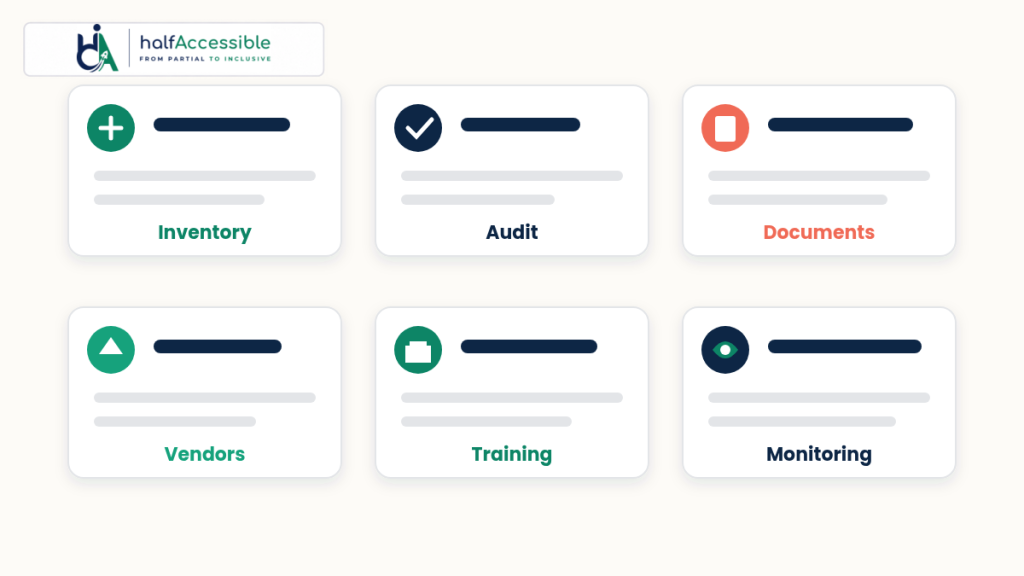
Move 2: Inventory Sites, Apps, and Vendor Tools Residents Actually Use
List every property the public uses to apply for benefits, pay fees, book appointments, register for school, or read emergency information — including subdomains and third-party widgets. ADA.gov is clear that calendars, payment systems, maps, and booking tools posted by the entity usually must meet WCAG 2.1 AA even when a vendor built them.
Mark owner, platform, traffic, and whether the journey is time-sensitive (elections, tax, licensing, benefits). That inventory becomes the risk register Adams and Cohan described when they told StateScoop to prioritise highest-traffic, highest-impact services first.
Move 3: Baseline High-Traffic Journeys With Manual Testing, Not Scans Alone
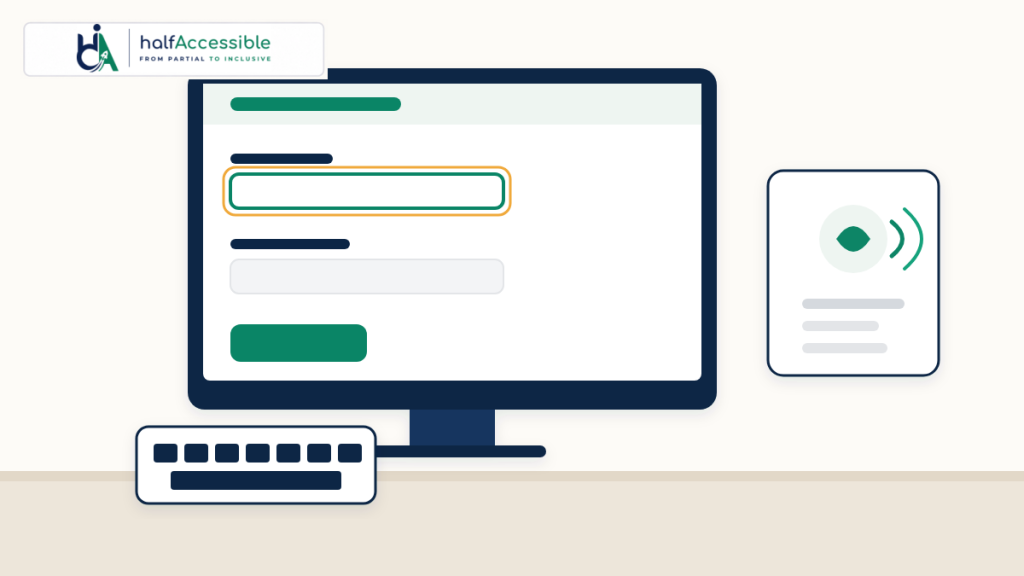
Automated scans are useful for backlog sizing. They are not a conformance claim. Walk the top journeys with keyboard-only navigation and at least one screen reader on the browsers your residents use. Our guides on manual keyboard accessibility testing, screen reader accessibility testing, automated accessibility testing, and mobile accessibility testing spell out the methods.
Keep a dated baseline. When counsel or executives ask whether the extra year was used, a timestamped audit beats a slide deck.
HalfAccessible’s ADA and Section 508 accessibility audit, accessibility audit services, and government accessibility audit request page are built for that public-sector baseline. See also the sample audit report.
Move 4: Treat Documents as a First-Class Workstream
NASCIO respondents keep naming document remediation as a top gap — for good reason. The DOJ rule’s “preexisting conventional electronic documents” exception only helps files that meet every condition ADA.gov lists, and it does not cover documents currently used to apply for, access, or participate in a service. A 2020 PDF business-license application still in active use is not off the hook because it is old.
Sort documents into: retire, archive under a true archive exception, replace with accessible HTML, or remediate. Prioritise active forms and instructions. Our document accessibility testing, PDF accessibility guide, and PDF document remediation services map onto that queue.
Move 5: Fix Exceptions Discipline Before You Lean on Them
Exceptions are narrow. Archived content needs all four ADA.gov conditions (created before the compliance date or reproducing older physical media; kept only for reference/research/recordkeeping; stored in a special archive area; unchanged since archive). Preexisting social media posts are limited to posts made before your compliance date. Third-party user posts on a message board may be excepted; the platform the entity installed usually is not.
When the deadline moved, the “preexisting” cutoff moved with it — which is useful for genuinely old reference files and a trap for anyone who parks active service content in a folder named “archive.” Train publishers on the difference.
Move 6: Put WCAG 2.1 AA Into Procurement and Vendor Escalation
If residents pay, book, or apply through a vendor product, that product is on your Title II clock. Ask for a current Accessibility Conformance Report (VPAT/ACR), a dated remediation plan for known gaps, and contract language that names WCAG 2.1 Level AA. NASCIO’s officer survey found states are relatively stronger on accessibility policy and procurement language than on full remediation capacity — use that strength while you staff the backlog.
Pair vendor pressure with internal accessibility remediation so your own templates and design system stop reintroducing the same failures.
Move 7: Fund Leadership, Training, and Monitoring — Not a One-Week Blitz
StateScoop’s September coverage stressed writing chief accessibility officer roles into policy (ideally statute) so the programme survives budget cycles. Adams described getting accessibility into the software development lifecycle early; Cohan compared accessibility to security and privacy as an ongoing technology control.
That means:
- A named accountable owner (even in a federated IT model).
- Accessibility training workshops for publishers and developers.
- Accessibility monitoring and governance so new pages and PDFs do not undo spring remediation.
- A realistic budget ask tied to high-risk journeys — 67% of states lacking dedicated funding is a programme risk, not a reason to wait until March 2027.
Private Businesses: This Extension Is Not Yours
The DOJ Title II web accessibility deadline applies to state and local government. It does not set a Title III technical standard or deadline for shops, clinics, or SaaS companies. Title III website risk continues through private litigation and related state claims — tracked separately in sources such as Seyfarth’s mid-year Title III filing counts and digital-accessibility trackers. If a private operator tells you “the ADA deadline was pushed,” correct the statute before you change the roadmap.
Start Before the DOJ Title II Web Accessibility Deadline Owns Your Calendar
The deadline moved; the standard did not; NASCIO’s state officers are already telling peers that funding, authority, documents and high-traffic systems are the binding constraints. Public entities that inventory now, audit critical journeys, remediate active documents, and bind vendors to WCAG 2.1 AA will treat April 2027 (or 2028) as a verification milestone — not a discovery crisis.
If you need a prioritised public-sector backlog, request a government accessibility audit, review our ADA and Section 508 accessibility audit, or book a consultation to scope audit, PDF remediation, training and monitoring.