Happeo
VPAT and conformance reporting delivered for SaaS procurement needs.
Read Happeo case study
digital accessibility company
Automated scanners catch barely a third of real accessibility barriers. Our IAAP-certified specialists perform manual testing with JAWS, NVDA, VoiceOver, TalkBack, keyboards, and switch devices - then hand your developers exact, code-level fixes. We test against WCAG 2.2, ADA, Section 508, EN 301 549, and IS 17802, with framework guidance explained in our accessibility standards guide.
HalfAccessible case studies include Happeo, Interstride, Ken Garff, SGA, and agency partners – named work with specific outcomes instead of vague enterprise logos. You can also explore our free accessibility tools before starting a paid engagement.
VPAT and conformance reporting delivered for SaaS procurement needs.
Read Happeo case studyEdTech accessibility audit rounds focused on students and administrators.
Read Interstride case studyChatbot accessibility review for automotive customer journeys.
Read Ken Garff case studyWhite-label audit and remediation work delivered under agency brands.
Read agency case studyEvery figure below comes from documented client work - browse the case studies to verify. Our team holds CPACC, WAS, and CPWA credentials from IAAP, plus DHS Trusted Tester certification for Section 508 conformance testing.
100+
Audits Completed
500+
Issues Resolved Across Manual Test Sessions
10+
Years of Accessibility Experience
CPACC / WAS / CPWA
IAAP and DHS Trusted Tester Credentials
Tell us about your website, web application or mobile application and we will follow up shortly.
Indicates a required field.
Your information is kept private and never shared with third parties.
From your first audit to procurement-ready VPATs and ACRs – manual testing by certified specialists at every step.
Manual WCAG 2.2 testing with NVDA, JAWS and VoiceOver. Prioritized findings with code pointers. Quick Audits start at $500.
Learn moreWe fix the barriers in your code — semantics, ARIA, focus order, color contrast, and form labeling — with tickets your developers can act on the same day.
Learn moreConformance reports that pass procurement review, built from real testing — not a template with boxes pre-checked.
Learn moreContinuous scanning, governance, and compliance tracking so new barriers get caught before your next release ships.
Learn moreAutomated tools are a starting point, not a finish line. They are excellent at catching things a machine can measure – missing alt text, low contrast ratios, missing form labels. They are structurally incapable of judging things that require human perception, like whether an alt description is meaningful or whether a screen reader announcement actually makes sense in context.
This is why HalfAccessible audits always pair automated scanning with manual testing on JAWS, NVDA, VoiceOver, and TalkBack – the scanner tells us where to look; the tester tells us whether it actually works.
We combine certified accessibility knowledge with real engineering experience, assistive technology testing, and procurement-ready documentation.
CPACC, WAS, CPWA, and DHS Trusted Tester credentials mean our findings are grounded in recognized accessibility standards.
Manual testing with JAWS, NVDA, VoiceOver, TalkBack, keyboard-only workflows, and switch-access devices.
Code-level remediation guidance tied to WCAG success criteria such as 2.4.7 Focus Visible and 4.1.2 Name, Role, Value.
Scalable programs, VPAT documentation, SLAs, governance, and procurement support for SaaS and enterprise teams.
Accessibility requirements do not look the same for a hospital patient portal, a SaaS dashboard, and a car dealership inventory search. We build our testing approach around your industry compliance exposure and user base.
Section 508 and ADA exposure across patient portals, telehealth, and EHR interfaces.
Healthcare & HealthTechVPATs that satisfy enterprise procurement and security review.
SaaS & B2B SoftwareSection 508 and WCAG 2.2 AA compliance for public-facing systems.
Government & Public SectorCheckout, cart, and product-catalog accessibility under ADA Title III.
eCommerce & RetailInventory search, financing forms, and third-party widget accessibility.
Automotive & DealershipCertified audit and remediation work delivered under your agency brand.
Digital AgenciesWe learn your product, tech stack, compliance targets, and deadlines.
Manual + automated WCAG 2.2 testing with assistive technologies.
Prioritized findings with severity, WCAG mapping, and fix guidance.
We fix issues or pair with your developers to fix them.
Regression testing confirms every barrier is resolved.
VPAT/ACR, accessibility statement, and compliance evidence.
Explore how we have transformed digital accessibility for brands across industries.
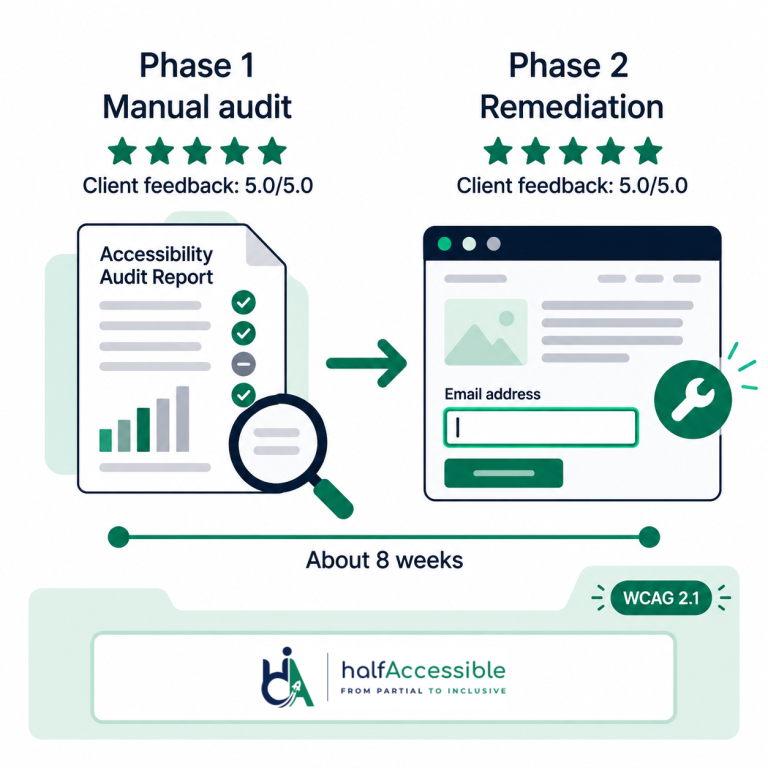
A two-phase engagement for a digital marketing agency's client site: a full manual WCAG 2.1 audit with screen-recorded findings, followed immediately by…
View Case Study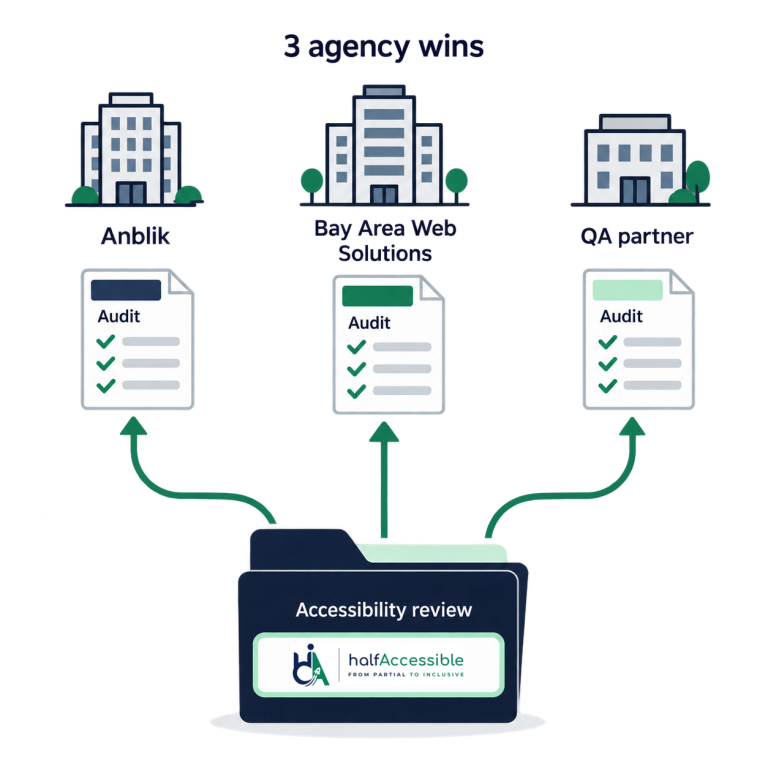
Three agencies — including Anblik and Bay Area Web Solutions — delivered certified WCAG audit work to their clients through HalfAccessible, with IAAP-certified review behind every report.
View Case Study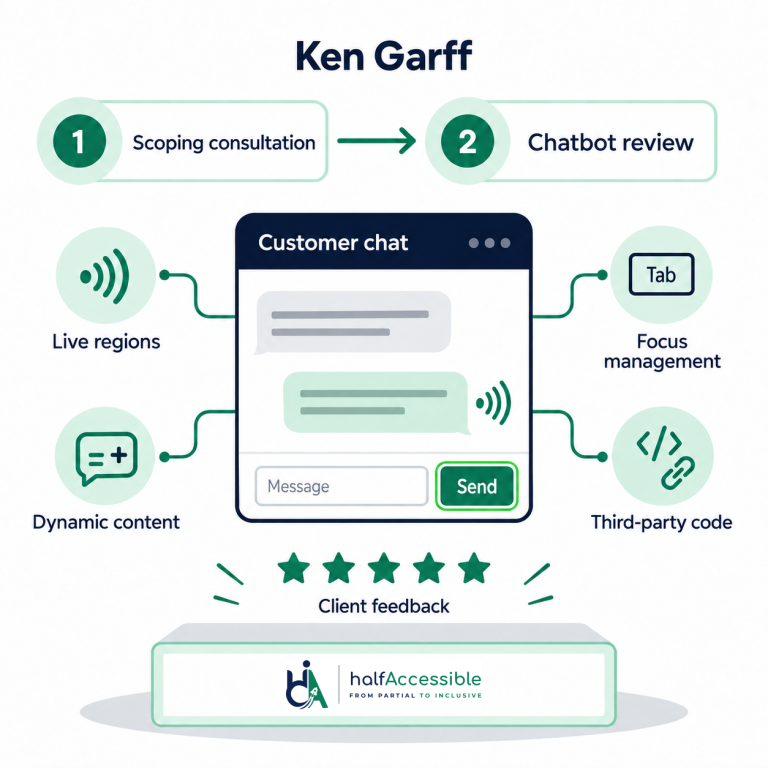
Ken Garff engaged us for a consultation and a hands-on chatbot accessibility review — testing the conversational widget with screen readers and keyboard-only navigation.
View Case Study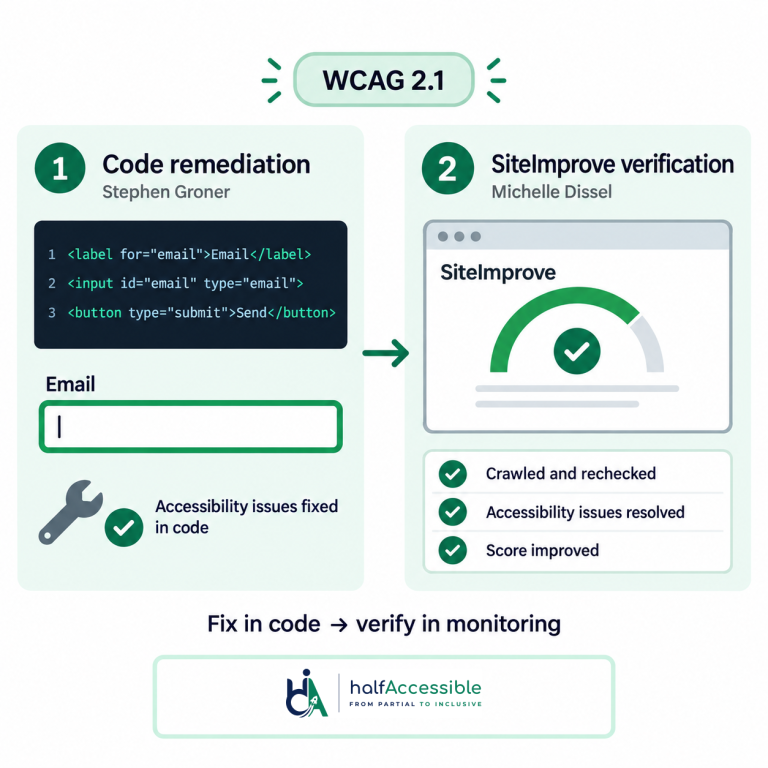
A two-phase engagement for SGA: hands-on ADA/WCAG 2.1 website remediation, then a systematic pass validating the work against SiteImprove reports and raising accessibility scores.
View Case Study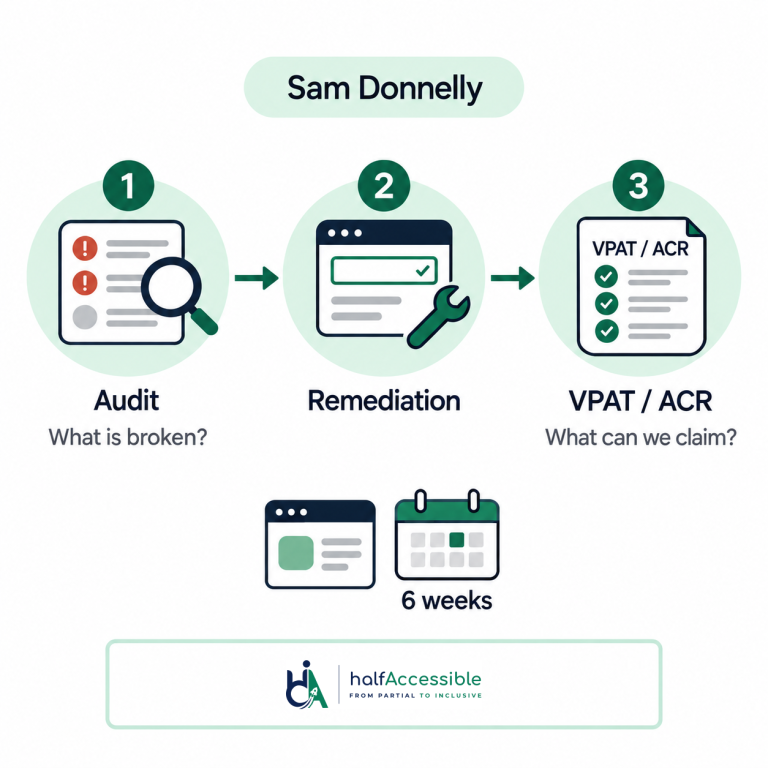
A three-contract engagement with Sam Donnelly: full accessibility audit and VPAT for a web application, followed by hands-on remediation of the findings — every contract rated 5.0.
View Case Study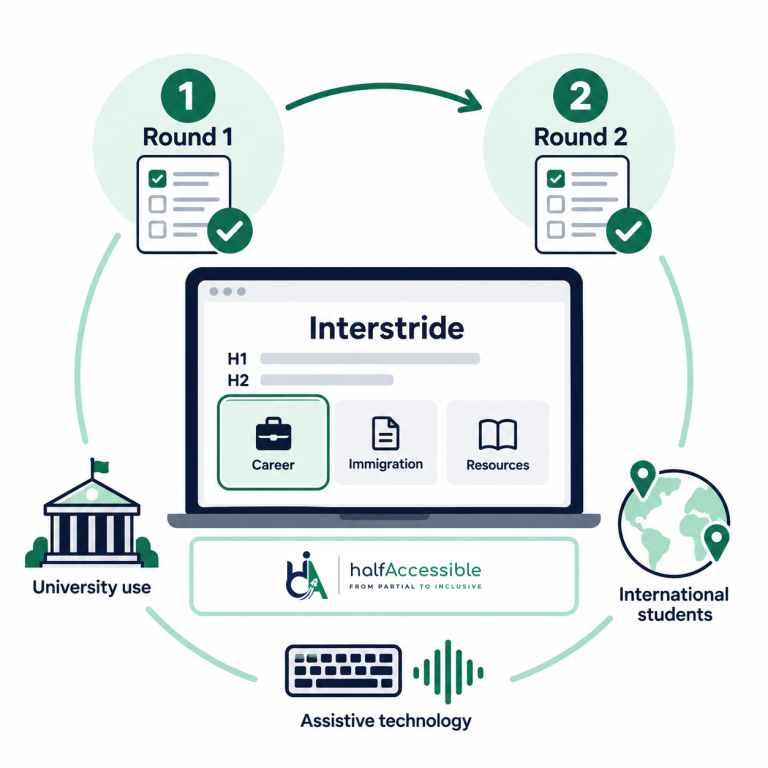
Interstride, an EdTech platform serving international students, engaged us twice across six months for in-depth accessibility audits of its web platform — both rounds rated 5.0.
View Case StudyA curated mix of accessibility strategy, technical testing guidance, and compliance resources - not just repeated definitions.
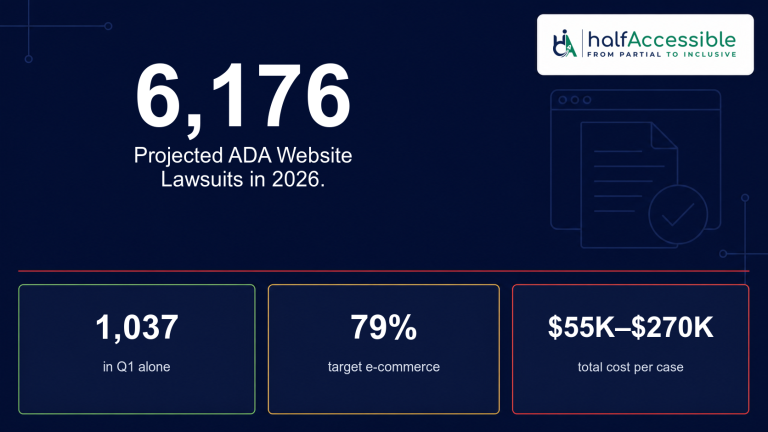
In the first quarter of 2026, plaintiffs filed 1,037 ADA website lawsuits in US federal courts. That works…
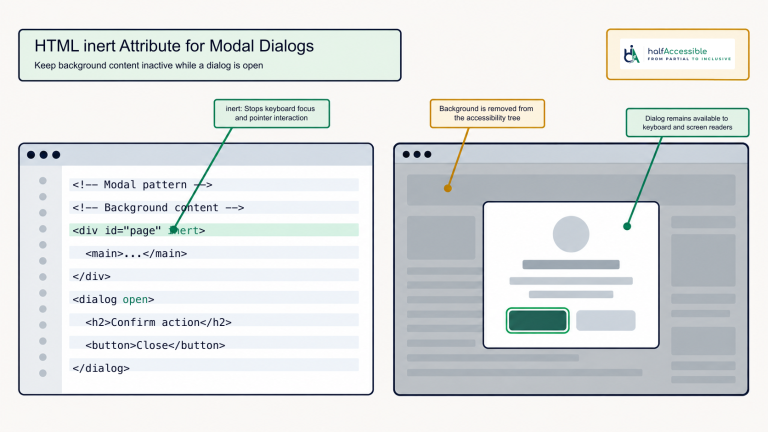
Read MoreThere is a small HTML attribute that most developers have never used. It solves one of the most…
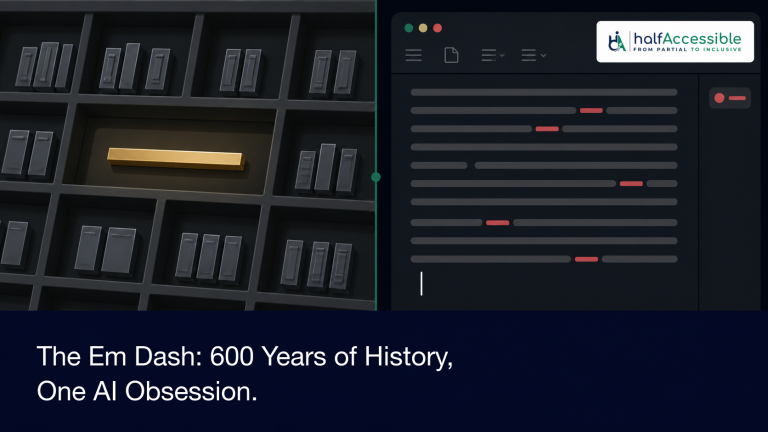
Read MoreYou have probably seen it. A sentence flows along normally, then interrupts itself with a long horizontal mark,…
Read MoreDirect answers about digital accessibility consulting, WCAG audits, VPATs, timelines, pricing, and assistive technology testing.
A digital accessibility consulting company tests websites, apps, and documents against standards like WCAG 2.2, ADA, and Section 508, then provides code-level fixes, testing with real assistive technology such as screen readers and keyboards, and compliance documentation such as VPATs. HalfAccessible combines automated scanning with manual testing by IAAP-certified specialists rather than relying on scanner output alone.
HalfAccessible offers a $100 1-Hour Consultation for teams that need direction first, a $500 Quick Audit for small sites, and a $2,000 Complete Audit for larger or more complex sites (including full Shopify storefronts), with final scope depending on site size, number of user flows, and whether you need full manual assistive technology testing. See the pricing page for a detailed breakdown.
Automated scans catch objectively measurable issues like missing alt attributes or low color contrast. Manual audits add human judgment: testing with JAWS, NVDA, and VoiceOver to check whether content is actually usable, not just technically present.
A VPAT, or Voluntary Product Accessibility Template, is a standardized document describing how a product conforms to accessibility standards like WCAG and Section 508. Once completed and reviewed, it is typically called an ACR, or Accessibility Conformance Report. You need one if you sell to government agencies, higher education, or enterprise buyers with procurement teams that require accessibility documentation.
Accessibility audit timelines depend on scope. A focused audit of a single application can be completed in as little as 7 days, while larger multi-flow platforms typically take 2-4 weeks for full manual and assistive technology testing.
HalfAccessible tests with JAWS, NVDA, VoiceOver, TalkBack, and switch-access devices, covering major screen reader combinations on Windows, macOS, iOS, and Android plus motor-impairment testing workflows.
Get Started
Get a free initial assessment and a clear roadmap to WCAG 2.2 compliance. You can also request a sample audit report before scoping a paid engagement.