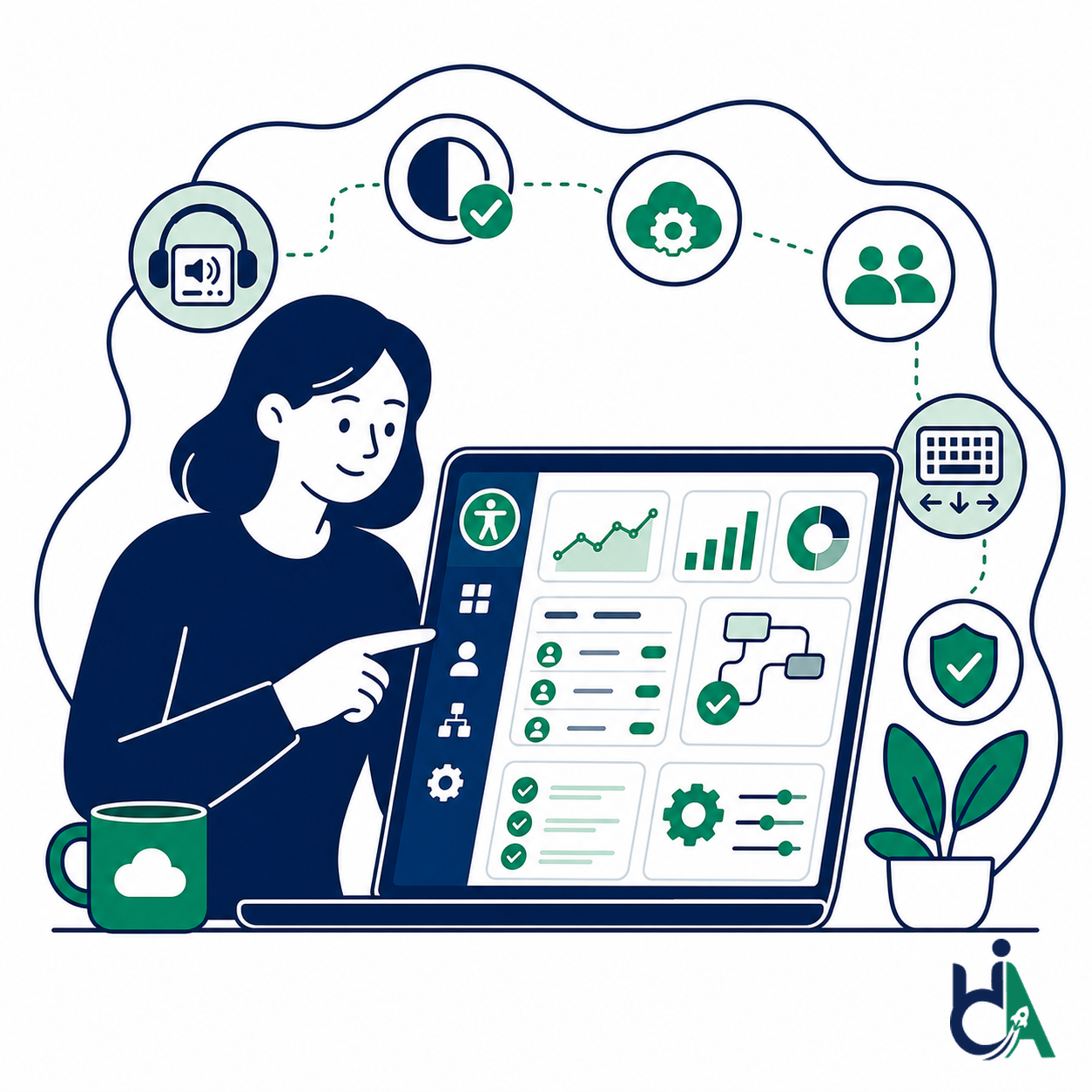
CRM Software
We audit customer records, lead pipelines, forms, tables, activity timelines, dashboards, search, filters, and admin workflows for SaaS accessibility barriers.
- CRM forms
- Customer timelines
- Pipeline dashboards
- Admin settings

product accessibility partner
Help your SaaS platform meet WCAG 2.2 AA while improving usability, enterprise adoption, and procurement readiness. Whether you are building a startup SaaS product or an enterprise platform, HalfAccessible helps you deliver accessible user experiences through audits, remediation, accessibility consulting, VPATs, and continuous accessibility testing.
SaaS accessibility is product accessibility. B2B software buyers care about enterprise procurement, VPATs, design systems, accessibility debt, CI/CD integration, and accessible user workflows, not just website compliance. Enterprise customers increasingly require accessibility during procurement, and inaccessible product areas can slow sales, renewals, onboarding, and adoption.
Accessible SaaS platforms improve onboarding, usability, customer retention, and customer satisfaction. Building accessibility early reduces long-term technical debt because teams can fix design system components, shared interaction patterns, data tables, forms, dialogs, and authenticated workflows once instead of repairing the same issue across dozens of screens.
HalfAccessible helps SaaS companies meet WCAG 2.2 AA expectations while building accessibility into product delivery. We support software accessibility testing, accessible SaaS platform remediation, VPAT services for SaaS applications, design system accessibility audits, accessibility QA for Agile teams, and enterprise software accessibility consulting aligned with standards such as WCAG and EN 301 549 where applicable.
We support product teams building complex authenticated software, internal applications, and enterprise SaaS platforms.
We audit customer records, lead pipelines, forms, tables, activity timelines, dashboards, search, filters, and admin workflows for SaaS accessibility barriers.
ERP systems often include complex workflows, large data tables, approvals, reports, inventory screens, and role-based navigation. We test these enterprise software patterns with keyboard and assistive technology.
HR products need accessible onboarding, employee records, benefits, payroll, performance reviews, time off flows, and document experiences for employees and administrators.
We test boards, lists, calendars, comments, notifications, modals, drag-and-drop alternatives, keyboard workflows, and team management for accessible collaboration.
Support platforms rely on ticket creation, queues, rich text editors, file uploads, status changes, search, macros, notifications, and customer portals that must remain accessible.
AI applications need accessible prompts, generated responses, chat histories, citations, file upload workflows, feedback controls, and status messages. We review both product UX and output presentation.
Analytics products need accessible dashboards, charts, filters, tables, exports, KPI widgets, and data exploration workflows that work beyond visual-only interaction.
We test campaign builders, segmentation tables, forms, editors, reporting dashboards, automations, and settings pages for accessible user workflows.
Healthcare SaaS products need accessible portals, forms, appointment workflows, documents, dashboards, and secure authenticated experiences for staff and patients.
FinTech SaaS needs accessible authentication, transaction history, dashboards, exports, statements, charts, compliance documentation, and secure workflows.
Learning platforms require accessible course navigation, quizzes, media, certificates, assignments, content authoring, documents, and user management.
Internal applications affect employees, contractors, and administrators. We help teams make custom workflows, admin portals, and operational dashboards accessible.
HalfAccessible works as a product accessibility partner across audits, remediation, VPATs, design systems, QA, and consulting.
We audit SaaS products against WCAG 2.2 AA across public pages, authenticated areas, component libraries, dashboards, forms, workflows, mobile experiences, and enterprise user journeys. Audits combine automated testing, manual testing, component review, and user journey testing.
We help product teams remediate issues in React, Next.js, Angular, Vue, and design systems. Support can include code guidance, component fixes, ARIA cleanup, keyboard interaction fixes, focus management, test cases, and retesting.
We review component libraries, tokens, color systems, typography, interaction patterns, focus states, variants, documentation, and usage guidance. Design system accessibility reduces repeated product defects and helps teams ship accessible patterns by default.
We prepare VPATs and Accessibility Conformance Reports for SaaS vendors that need enterprise sales readiness, government contracts, education customers, healthcare procurement, and security or compliance questionnaires. Reports are grounded in actual product testing.
We support regression testing, sprint validation, release verification, and accessibility acceptance testing. Accessibility QA helps teams catch defects before they reach customers and gives product owners a clearer release signal.
We help SaaS teams build accessibility roadmaps, developer support models, design review practices, engineering workshops, CI/CD testing strategies, procurement readiness, and governance for ongoing releases.
We help SaaS teams prepare for WCAG alignment, procurement questions, VPATs, and global accessibility expectations.
Primary accessibility benchmark for SaaS platforms, authenticated workflows, and enterprise software.
Important for European procurement and ICT accessibility expectations.
Procurement documentation for enterprise, government, education, and healthcare buyers.
US accessibility risk context for public-facing and customer-facing software experiences.
Relevant for many digital products and services in EU markets.
Document accessibility guidance for reports, exports, invoices, and generated PDFs.
We audit modern stacks, component systems, authenticated journeys, admin workflows, and enterprise product experiences.
SaaS accessibility debt often lives inside reusable components, dashboards, authenticated workflows, tables, forms, dialogs, editors, uploads, and notifications.
SaaS accessibility starts at account access. Login forms, SSO, OAuth, MFA, password reset, account invitations, session timeout, role switching, and focus management must work with keyboards and assistive technology. We test accessible authentication patterns so enterprise users can sign in, recover accounts, and manage teams without blocked workflows.
Dashboards combine complex layouts, charts, graphs, tables, cards, KPI widgets, filters, and live updates. We review accessible data visualization, heading structure, keyboard navigation, screen reader labels, chart alternatives, and responsive zoom behavior so users can understand product data without relying only on visuals or mouse hover.
Enterprise tables often include sortable columns, filters, pagination, virtual scrolling, sticky headers, row actions, bulk selection, inline editing, and exports. We test accessible tables for semantics, keyboard support, focus order, announcements, column relationships, and usable responsive behavior in large B2B software datasets.
User onboarding, product configuration, checkout, CRM forms, ticket creation, settings pages, and admin workflows need clear labels, instructions, validation, required-field messaging, error summaries, and keyboard navigation. We test complete SaaS user journeys, not only isolated form fields, because accessibility failures often appear across multi-step workflows.
Modal dialogs are common in SaaS products for settings, confirmations, upgrades, deletes, imports, filters, and onboarding. We test focus trapping, initial focus, Escape behavior, background interaction prevention, accessible names, descriptions, and screen reader announcements so modals are predictable and reversible.
Buttons, dropdowns, date pickers, accordions, tabs, tooltips, popovers, comboboxes, menus, toasts, and custom selects can spread accessibility debt across an entire SaaS platform. We review reusable components, design tokens, color systems, typography, and interaction patterns so fixes scale across product teams.
Rich text editors power comments, knowledge bases, ticket replies, campaign builders, notes, and documentation. We test keyboard shortcuts, formatting toolbar access, focus order, screen reader compatibility, status updates, and content semantics so users can create and edit content effectively.
File upload flows often fail when drag-and-drop is the only path, progress is visual-only, errors are not announced, or uploaded files lack keyboard-operable controls. We test file selection, drag-and-drop alternatives, upload status, progress indicators, validation errors, removal controls, and retry behavior.
Toast messages, success alerts, error alerts, background job updates, mentions, billing warnings, and sync status must be announced at the right time without overwhelming users. We review live regions, focus behavior, dismissal controls, timing, and visual persistence for accessible SaaS notifications.
Automated testing can catch regressions before release, but only when it is integrated thoughtfully. We help teams combine axe-core, Playwright, Cypress, GitHub Actions, Azure DevOps, component tests, manual checks, and acceptance criteria so accessibility QA fits Agile delivery instead of becoming a final QA surprise.
Accessibility is most effective when integrated throughout the product development lifecycle rather than treated as a final QA step.
We validate product-level accessibility features while helping teams improve enterprise readiness, reduce defects, and build sustainable accessibility practices.
Use these resources and industry hubs to strengthen accessibility across your product, documents, procurement, and customer-facing workflows.
Book a practical consultation for your SaaS platform, authenticated product, design system, VPAT, CI/CD testing strategy, or enterprise procurement readiness.
Schedule Free ConsultationAnswers to common questions about SaaS accessibility, WCAG, authenticated audits, React apps, design systems, VPATs, Agile QA, dashboards, regression testing, and ongoing releases.
SaaS accessibility means people with disabilities can use your software product with assistive technology, keyboard navigation, zoom, captions, clear forms, accessible charts, proper semantics, and predictable workflows. It applies to public pages, authenticated areas, dashboards, components, settings, billing, reports, and admin panels.
WCAG is the most common technical standard used to evaluate SaaS accessibility. Enterprise buyers, procurement teams, government customers, education customers, and regulated industries often ask SaaS vendors about WCAG conformance, VPATs, accessibility roadmaps, and remediation status.
Yes. We can audit authenticated SaaS workflows using staging environments, approved test accounts, or guided access. This is important because dashboards, settings, billing, team management, and reports often contain the most important accessibility risks.
Yes. We test and remediate React applications, including custom components, routing, modals, data tables, forms, focus management, ARIA usage, and design system patterns. We also support Next.js and other modern frontend frameworks.
Yes. We review component libraries, tokens, color systems, typography, focus states, interaction patterns, documentation, and accessibility acceptance criteria. Design system accessibility helps prevent the same issue from appearing across many product screens.
Yes. We prepare VPATs and Accessibility Conformance Reports for SaaS applications based on actual accessibility testing. VPAT support is useful for enterprise sales, public-sector procurement, education customers, healthcare procurement, and vendor questionnaires.
Yes. Accessibility can fit into Agile through design reviews, component acceptance criteria, sprint validation, regression tests, developer support, QA checklists, and release verification. We help teams avoid treating accessibility as a final QA step.
Yes. We test dashboards, charts, tables, filters, cards, KPI widgets, navigation, exports, and responsive behavior. We focus on keyboard navigation, accessible data visualization, screen reader clarity, and low-vision support.
A SaaS product should be audited before major releases, after significant design system changes, before enterprise procurement, and periodically as workflows evolve. Ongoing regression checks help prevent accessibility debt from returning.
Yes. We test responsive web apps, progressive web apps, and mobile apps where scope allows. Mobile checks can include VoiceOver, TalkBack, touch target size, zoom, focus order, gestures, and screen reader labels.
Yes. We can review buttons, dialogs, dropdowns, date pickers, tabs, accordions, comboboxes, tooltips, popovers, tables, editors, charts, and upload components. Component-level fixes are one of the fastest ways to reduce accessibility debt.
Yes. Regression accessibility testing can include automated checks, manual keyboard testing, screen reader smoke tests, component tests, and release validation for high-risk workflows.
Cost depends on product size, number of workflows, authenticated roles, component library scope, mobile coverage, document exports, and VPAT requirements. A focused audit can target the highest-risk journeys first.
Yes. We can support ongoing releases with accessibility QA, sprint reviews, component guidance, retesting, developer office hours, CI/CD recommendations, and roadmap planning.
Yes. We audit Angular, Vue, Next.js, React, Svelte, Blazor, ASP.NET, Java Spring, Electron, PWAs, and design systems. The accessibility principles are consistent, but implementation guidance is adapted to the stack.
Yes. We can advise on axe-core, Playwright, Cypress, GitHub Actions, Azure DevOps, Storybook checks, component tests, and practical thresholds so automated testing supports release quality without replacing manual review.
No. Automated tools are useful but cannot fully test keyboard workflows, screen reader usability, focus management, chart alternatives, meaningful labels, route changes, or complex authenticated journeys. We combine automation with manual testing.
Yes. We can support VPATs, ACRs, procurement questionnaires, accessibility statements, remediation plans, and evidence for enterprise customers that ask about accessibility maturity.
Yes. We test plan selection, checkout, invoices, payment forms, billing settings, subscription changes, confirmations, errors, and account ownership workflows for accessibility barriers.
Yes. We test prompt inputs, generated response regions, chat history, citations, file uploads, loading states, feedback controls, and keyboard/screen reader workflows for AI products.
Yes. We provide training for designers, developers, QA, product managers, and leadership on WCAG, accessible components, testing workflows, design review, and Agile accessibility practices.
Yes. Retesting confirms whether fixes resolve the original issue and whether the user workflow is accessible with keyboard, screen reader, zoom, responsive layouts, and expected browser combinations.